6 Types Lever of Micro Switches and How to Change the Micro Switch Lever
The lever is the author of the micro switch, which is attached to the switch that helps trigger the internal switching mechanism. It extends from the switch body and is the part that gets pressed, pushed, or contacted by an external force.
Why Needs Lever for Micro Switch?
Amplified Force: The lever reduces the force required to activate the switch.
Increased Travel Distance: Allows for longer or more gradual triggering action.
Enhanced Sensitivity: Levers of different lengths and types can be selected to fit the installation space, helping to detect very slight or gentle movements.
Protects the switch: In some designs, the lever absorbs wear and tear rather than the switch itself.
Straight Lever Micro Switch
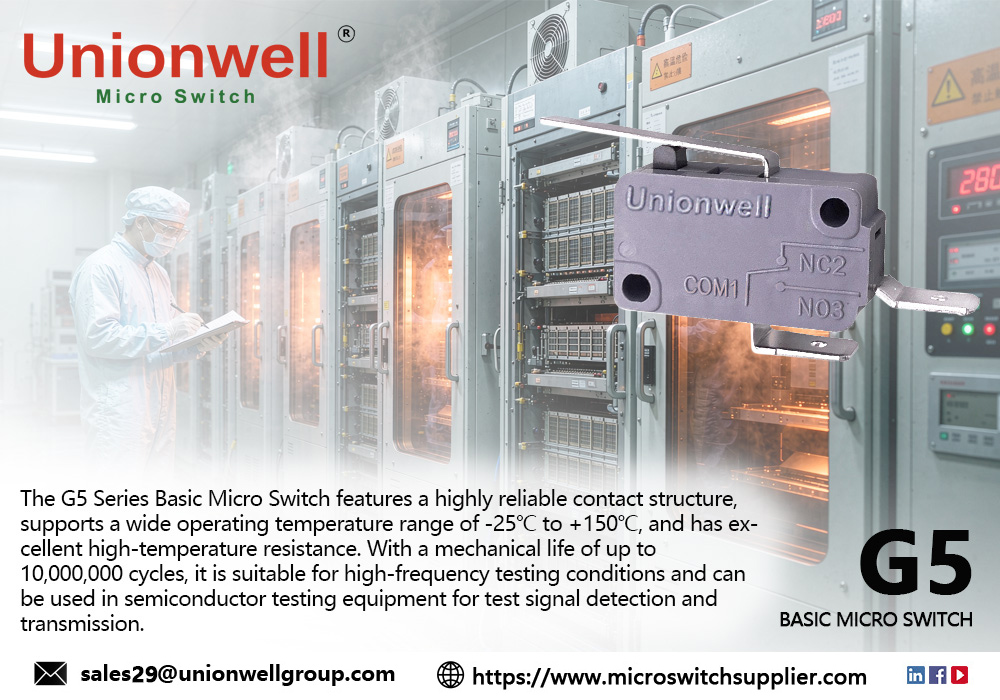
Straight lever micro switch features a flat, elongated metal arm extending directly from the actuator. It provides a simple and responsive mechanism for triggering the switch with minimal force. The lever can detect both light contact and gradual movement, making it ideal for precise applications.
Feature
- Sensitive actuation with low operating force
- Simple mechanical design with fewer moving parts
- Easily customizable length and angle, according to your product's needs.
Applications
Household appliances: such as detecting microwave ovens, oven door lock safety devices
Elevator: when the contact plate and passengers or obstacles touch, the lever to start the internal structure of the micro switch, rapid transmission of signals to make the door open.
Industrial: Limit switches, industrial machinery for position detection
Roller Lever Micro Switch
Roller lever micro switch is a micro switch has straight lever with a rolling wheel at the end. This allows the switch to respond smoothly to side or angled pressure, minimizing friction and wear. It’ s highly effective in dynamic environments with moving mechanical parts.
Feature
- Roller reduces wear and ensures smooth actuation
- Ideal for sliding or rotating contacts
- Durable and long-lasting under repeated use
Applications
Industrial: Conveyor belt systems and mechanical cams or automated machinery with moving parts where the actuator is triggered by lateral movement.
Garage door mechanisms:Used to check if the door is closed or opened, to triggers alarms or other security measures.
Printers: the roller lever micro switch can be used to detect paper jams in printers.
Simulated Roller Lever Micro Switch
Feature
- Customizable end rounded bump size and lever length.
- Less expensive than roller lever micro switches
- Fewer moving parts, improving durability
- Compact and easy to install
Application
vending machines: When the vending machine dispensing system is activated, the lever to move which triggers the internal structure of the micro switch, sending an electrical signal to the control board to confirm that the product has been dispensed.
Consumer electronics: Used in Environments where dust/debris could jam rollers, such as mouse, vacuum cleaner and cell phone chargers.
Pin Plunger Micro Switch
Pin plunger micro switch is activated by direct vertical pressure on a small metal or plastic pin. Unlike lever-based switches, this type offers precise, linear movement.
Feature
- High accuracy and minimal travel distance
- Space-saving design
- Suited for direct contact triggering
- Excellent for repetitive high-speed actuation
Application
Medical devices:The high accuracy of Pin plunger micro switch allows them to be used in medical and laboratory equipment, push buttons and control panels.
Limit detection: Its space-saving design facilitates limit detection in compact machines.
Industrial safety: The short travel facilitates their rapid response in safety interlocks in industrial machinery.
Hinge Lever Micro Switch
Hinge lever micro switch uses a flexible joint that allows the lever to pivot easily. In some versions, a roller is attached to the end, creating a hinge roller lever for even smoother actuation. Hinge lever usually use in waterproof Micro Limit Switch.
Feature
- Flexible angle adjustment.
- Tolerates misalignment or variable pressure.
- Available in waterproof and dustproof variants.
- Compatible with high-travel or high-tolerance devices.
Application
Automation equipment: Detects whether a car hood, trunk, or door is securely closed. The hinge lever compensates for variations in closing force or alignment.
Outdoor appliances: The IP67 water and dust resistance of the Hinge lever micro switch facilitates its use in outdoor applications such as lawnmowers and EV charging posts.
Agricultural & Construction Equipment: Used in excavators, tractors, or loaders to monitor attachments. Hinged lever micro switches resist dust, dirt and heavy impacts, and can also accommodate movement over rough terrain.
Panel Plunger Micro Switch
Panel plunger micro switch is mounted to a panel by nut and features a push-button style actuator, which have a largest over-travel. The plunger is pressed directly, making it ideal for confined spaces where levers aren't t practical.
Feature
- Compact design for panel integration
- Push-type actuation for vertical or linear motion
- Durable under repeated pressing
Application
Control panels: Used in control panels, such as elevator buttons, the buttons can be activated directly with minimal time difference.
User interfaces: This panel plunger micro switch can also be used for HMIs that require tactile feedback, such as testing instruments, security devices, industrial equipment with push-style triggers.
How to Change Micro Switch Lever?
Changing the lever on a micro switch can extend the lifespan of your device or adapt it for a new application. Here's a simple guide:
STEP 1 Power Off: Always disconnect the device from any power source, ensure you safety.
STEP 2 Disassemble: Remove the switch from the device and locate the lever mount.
STEP 3 Release the Leve: Use a tool, like a paper knife or tweezers to unclip or slide the old lever from the switch.
STEP 4 Attach the New Lever: Align the new lever with the mounting points and click it into place. Make sure it's firmly attached and can move freely.
STEP 5 Test the Switch: Manually press the lever to ensure it actuates the switch correctly.
STEP 6 Reinstall the Switch: Once everything works, reassemble and test the full device.
But if your micro switch use a total insertion type lever, it can’t be replaced, because it will damaged the construction. This type of the lever mostly used in sealed micro switch which are manufactured using hot melt injection molding to ensure that the micro switches are sealed and water and dust resistant.
Can a Micro Switch be Used Without a Lever?
Levers are not required for micro switches and you can select them depending to the installation space and usage.For example, push button micro switches and keyboard switches do not have levers, they are switches where the internal movement is triggered by an external force directly pressing the internal button or pin. Micro switches that do not use levers can respond more quickly, but accordingly require higher operating forces and are less tolerant of misalignment or side contact.
Conclusion
There are six different types of lever micro switches, each with their own characteristics and suitable application scenarios. Understanding when a lever is required and when it is not will help you better select a micro switch for your product. And learning how to replace levers can save you money. Whether you're designing new devices or maintaining existing systems, choosing the right actuator improves performance and durability.
Unionwell, as a leading manufacturer of micro switches in China, we not only produce lever microswitches, but also mechanical keyboard switches, pushbutton switches and so on. We have a professional R&D team, global safety certification, such as ISO, IATF certification, and automated production equipment to improve production efficiency while ensuring product quality consistency, which is the first choice for ODM, OEM. Contact us for free sample and catalog now!
Micro Switches vs. Limit Switches: Differences and Applications
What is a Shift Lever Micro Switch? Definition & Common Issues
Related Article