Top 5 Best Micro Switch Types for Home Appliance
In home appliances, micro switches—despite their small size—perform critical roles such as position detection, status feedback, and safety interlocking. From detecting the closure of a microwave oven door or the lid of a washing machine to controlling internal mechanisms in an ice maker, the operational reliability of these switches directly impacts the stability of the entire appliance.
A "home appliance micro switch" is not a single, fixed type of switch, but rather a category of solutions tailored for household appliance applications. Because different devices have distinct requirements, selecting the right switch involves more than just considering dimensions and current ratings; it requires a comprehensive evaluation of detection functions, actuation methods, electrical loads, and operating environments. This article introduces five common types of micro switches used in home appliances to help you select the most suitable component for your specific application.
What Makes a Home Appliance Micro Switch the Right Choice?
Selecting the appropriate home appliance micro switch begins with a clear understanding of the device's specific requirements. The switch must not only fit into the designated space but also align with the movement of the appliance's mechanical components, the circuit design, and the operating environment. Since these switches can be customized to meet specific needs, it is essential to first identify the primary requirements:
1. Installation dimensions and mounting methods must align with the appliance's structural design.
2. The actuator determines how the switch receives external mechanical input.
3. The switch must meet the device's electrical and environmental specifications.
Only by fully understanding these requirements can you select the most suitable product.
Start with the Detection Function, Not the Switch Model
Micro switches in home appliances typically perform three types of tasks:
1. Position detection: Determining whether a component—such as a refrigerator door, a washing machine lid, or an internal moving part—has reached a specific position.
2. Safety interlocking: Ensuring safety, such as detecting whether a microwave oven door is securely closed.
3. Travel/stroke detection: Triggering a signal to the control system when a moving component reaches a designated point.
Each of these functions entails different mechanical structures and electrical requirements. Therefore, engineers should first define the specific task the switch needs to perform before selecting the appropriate product type.
Top 5 Micro Switch Types for Home Appliance Projects
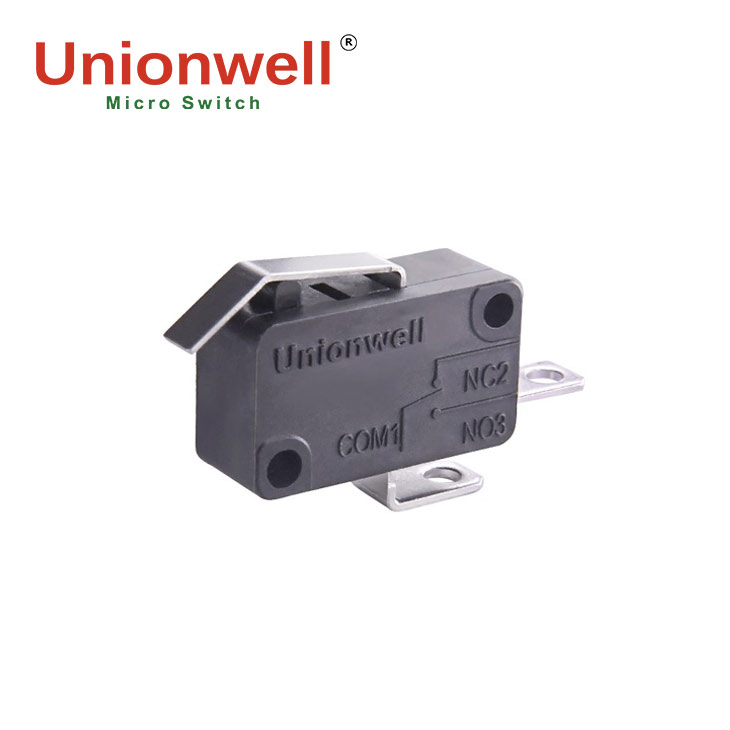
1. Basic Micro Switches for General Position Detection
Basic micro switches are suitable for position detection and status feedback in home appliances. Their internal contacts switch rapidly when the actuator reaches the operating point, making them ideal for applications that require clear electrical on/off signals. When selecting these switches, consider the contact configuration, operating force, and application environment:
- Common contact configurations include SPST, SPDT, and DPDT; ensure the choice aligns with the device's circuit design.
- The operating force must match the driving force of the moving parts. This prevents issues such as placing excessive strain on plastic brackets or door mechanisms, failing to trigger the switch reliably, or causing damage through over-compression.
- Basic micro switches are best suited for relatively dry, clean, and protected environments. If they will be exposed to moisture or dust for extended periods, consider using a sealed version instead.
2. Sealed Micro Switches for Environments with Moisture and Contamination
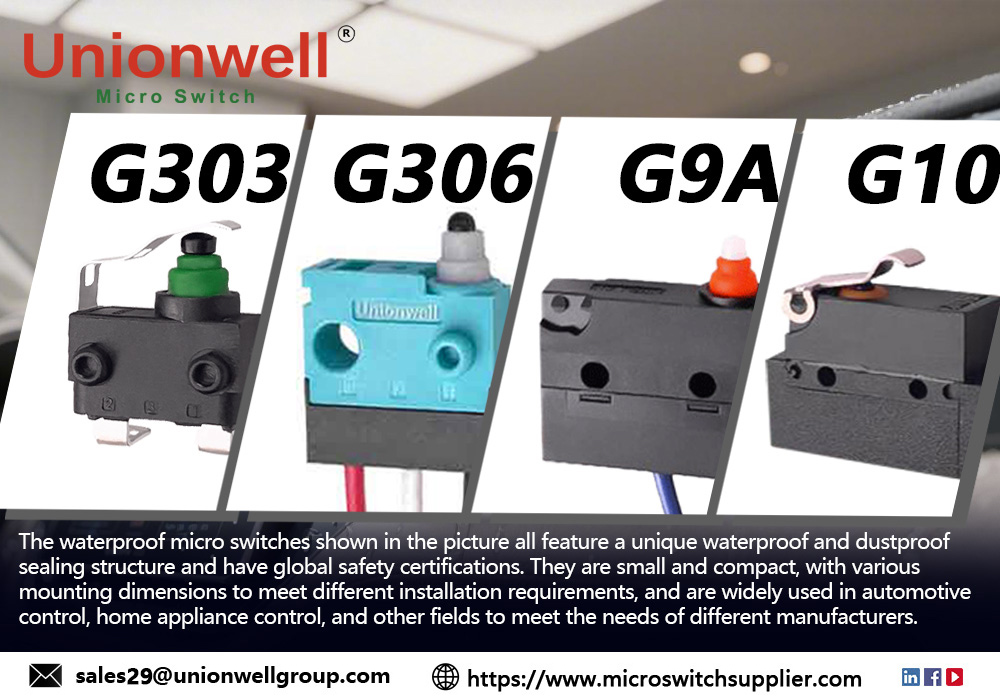
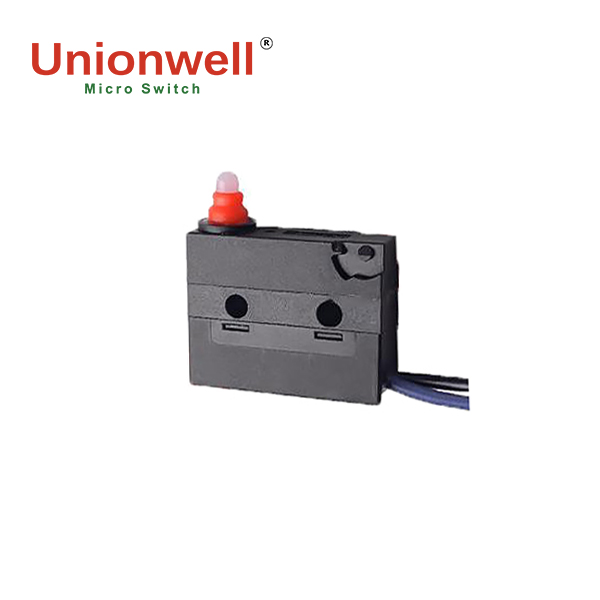
In appliances such as washing machines, ice makers, coffee machines, and humidifiers, switches may be exposed to moisture, condensation, or dust. In these cases, sealed micro switches are recommended. Their design—featuring seals on the housing, actuator, and connection points—minimizes the risk of moisture or contaminants entering the internal mechanism. When selecting these, verify the ingress protection (IP) rating, temperature range, mounting orientation, and actuator performance, always referring to the specific product data-sheets and test results.
3. Door Interlock Switches for Appliance Safety
Door interlock switches are primarily used in appliances that require monitoring the status of a door or controlling circuits related to the door (e.g., in microwave ovens or washing machines). These applications require careful attention to the mechanical linkage between the door and the micro switch. If the mounting position is misaligned, the switch may fail to trigger even when the door is closed; similarly, if the path of the door latch does not align with the actuator, the switch’s operation may become unstable. For devices requiring locking mechanisms or safety interlocks, always verify the mechanical structure, contact configuration, and operating sequence.
4. Plunger Micro Switch for Direct Linear Movement
A plunger micro switch receives external pressure via a plunger mechanism; it is well-suited for applications where a moving component pushes the switch directly along a specific, defined path. When selecting such a switch, it is crucial to consider the direction of the applied force and the operating travel distance. Care should be taken to avoid placing excessive, unintended loads on the plunger, as this can compromise long-term operational stability. The operating force is also a key factor: an excessively high force increases resistance for the moving mechanism, while an insufficient force may lead to accidental or unintended actuation.
5. Compact Limit Switch for Defined Travel-End Detection
Compact limit switches are primarily used to detect when a moving mechanism has reached a specific position or the end of its travel. In home appliances, the integration of the switch’s actuator, housing, and mounting structure with the external mechanical movement is particularly important. It is worth noting that for simple position detection, a basic micro switch is usually sufficient; a compact limit switch should be considered only when specific travel-end detection or a particular mechanical mounting configuration is required.
Which Home Appliance Micro Switch Fits Your Project?
Microwave Ovens: Door Interlocking and Position Detection
In microwave ovens, micro switches are primarily used for door position detection and door interlocking control. As the door opens or closes, the door hook and its associated bracket actuate the switch, causing a change in the state of its contacts. For microwave oven projects, it is essential to determine whether the switch serves as a door-status feedback mechanism or as an integral part of the door interlocking system. If an interlocking function is involved, the mechanical structure, the sequence of switch actuation, and the overall control logic of the appliance must all be evaluated.
Washing Machines: Lid Detection and Repeated Mechanical Actuation
In washing machines, micro switches may be used for lid detection, door-status feedback, or identifying the position of internal mechanisms. When the lid is closed, a bracket actuates the switch; when the lid is opened, the actuator is released, allowing the control system to determine the lid's position based on the contact state. Given that washing machines are subject to vibration and moisture during operation, the need for sealing should be assessed based on the specific installation location of the switch.
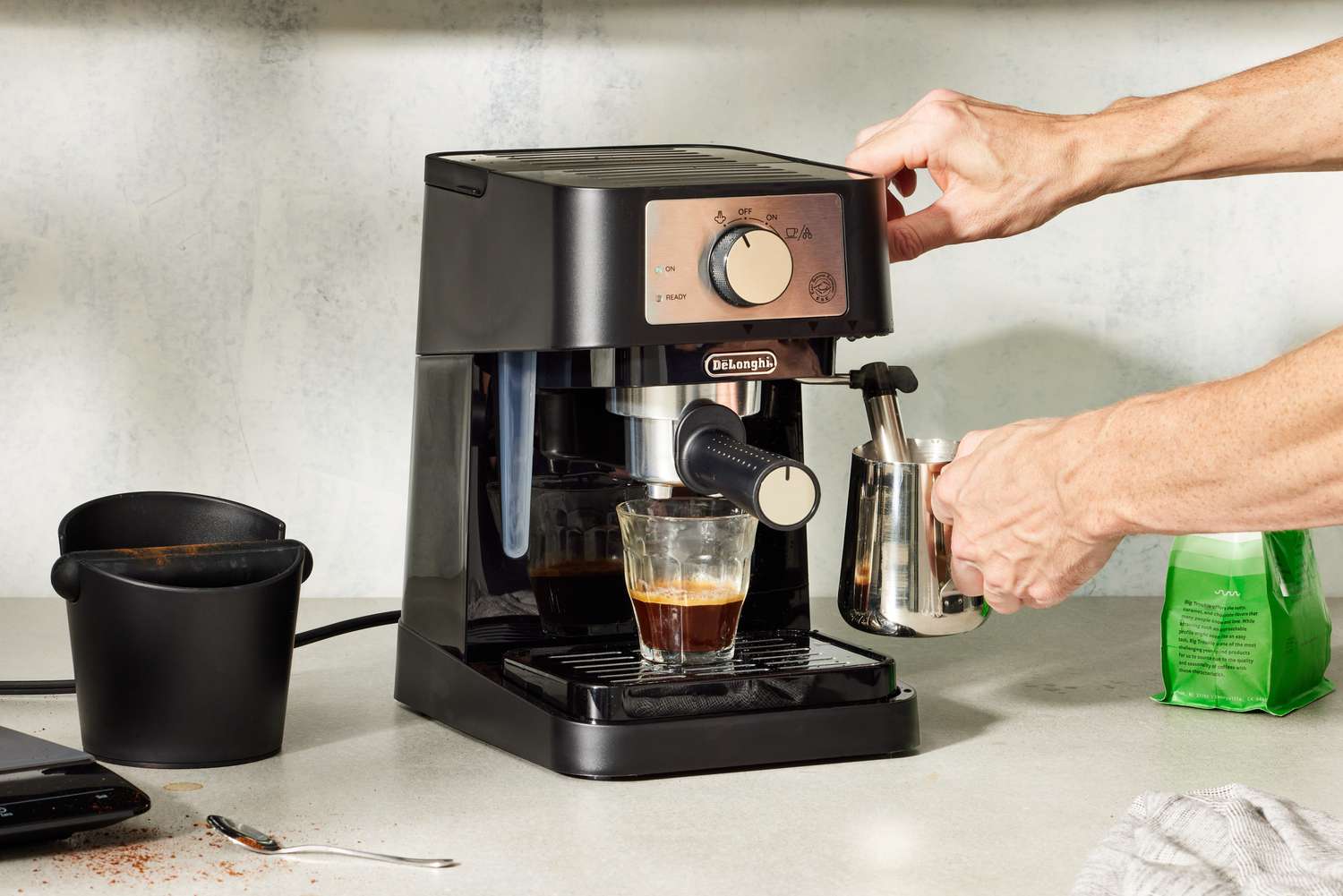
Coffee Machines and Ice Makers: Compact Structures and Environmental Exposure
Coffee machines and ice makers feature compact internal structures, with micro switches typically installed near movable covers or transmission mechanisms:
- In coffee machines, which generate hot water and steam, any micro switch located near steam paths must be evaluated for temperature resistance and moisture protection.
- In ice makers—which involve processes such as water supply, ice formation, and ice harvesting—micro switches provide feedback when specific components reach their required positions.
Refrigerators and Other Appliances: Door, Cover, and Mechanism Detection
In refrigerators, door switches are used for detecting the door's status or controlling interior lighting. For appliances with moving parts—such as electric drying racks or air purifiers—switches are often used to verify that a component has reached a designated position. If a component moves in a straight line, a plunger-style actuator may be appropriate; if the movement follows a more complex path, a lever or roller-style actuator should be considered.
Conclusion
The selection of micro switches for home appliances should be based on the specific functions of the equipment: basic micro switches are suitable for general position detection; sealed micro switches are ideal for environments exposed to moisture or contaminants; door interlock switches are designed for monitoring door status and enabling associated interlock controls; plunger-style micro switches are well-suited for direct linear actuation; and compact limit switches are best for applications that require defined travel endpoints and specific mechanical triggering mechanisms.
For home appliance and component manufacturers, it is advisable to evaluate multiple factors and conduct practical assembly and repeated-operation testing during the sampling phase. Unionwell can assist clients in identifying the most appropriate micro switch solutions by considering factors such as available installation space, actuation methods, electrical loads, and environmental requirements. For manufacturers currently developing products like microwave ovens, washing machines, coffee machines, or ice makers, providing details on the application scenario and key structural parameters will help in determining the most accurate product configuration.
How a Dustproof Mini Micro Switch Keeps Your Sofa Hand Control
Related Article