How a Motor Electronic Lock Switch Improves Charging Gun's Safety and Control
With the rapid development of the new energy vehicle industry, the construction of charging infrastructure is accelerating globally. Among these facilities, the charging gun serves not only as a conduit for electrical energy transmission but also as a critical node for safety control within the entire charging system. User expectations for charging equipment have evolved to prioritize "safety, stability, and intelligence," thereby imposing higher standards on core control components.
However, charging guns face challenges such as plug loosening during charging, user errors resulting in "hot-unplugging" (disconnecting while under load), and unstable locking mechanisms—all of which can pose significant safety risks. Consequently, the motor electronic lock switch has emerged as a pivotal control component within charging gun systems. This article provides a systematic analysis of how this device enhances the safety and control capabilities of charging guns—examining its structural composition, operating principles, core features, and application scenarios—thereby offering valuable technical reference for industry professionals.
What Is a Motor Electronic Lock Switch?
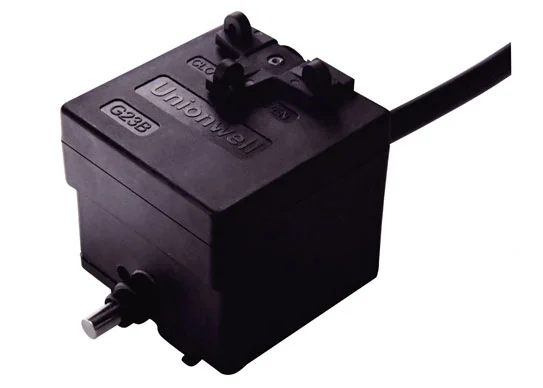
A motor electronic lock switch is an electronic locking device that integrates a motor-driven mechanism with micro switch based detection capabilities. Its primary function is to execute "locking" or "releasing" actions via a motor-driven locking mechanism upon receiving a control signal, while simultaneously providing real-time feedback on its current status through internal switches.
Within a charging gun system, this device primarily fulfills the following functions:
- Controls the mechanical locking of the charging plug, ensuring a stable connection throughout the charging process;
- Prevents forceful manual disconnection while the system is under electrical load;
- Provides real-time status feedback to the control system to facilitate safety assessments and decision-making.
Rather than relying solely on a single mechanical structure, the motor electronic lock switch utilizes electronic control methods to govern its operation, rendering the entire process more precise and controllable.
Core Structure of the Motor Electronic Lock Switch
The motor electronic lock switch consists of four distinct modules:
- Motor Drive Mechanism: This module employs a miniature DC motor; by controlling the direction of the electric current, it executes forward and reverse rotations to drive the locking mechanism. This component directly determines the device's response speed and operational stability.
- Locking Actuation Structure: Common configurations include locking pins or latch mechanisms, which are driven by the motor to execute insertion (locking) or release actions. This structure requires sufficient mechanical strength to ensure durability and enhance the user experience.
- Status Detection Switch (Micro switch): This snap action switch mechanism is utilized to detect whether the locking mechanism has fully engaged (reached its locked position) and to relay this signal back to the control system; it serves as a critical link in establishing a closed-loop control system.
- Control Circuit Module. This module is responsible for receiving external signals and controlling motor actuation, while simultaneously processing feedback information to execute the system's logical control.
Compared to traditional mechanical locks, the most significant distinction of this structure lies in its combination of "electronic drive and control" and "status feedback." This configuration endows the locking process with greater precision and controllability, thereby offering users a more flexible and convenient experience.
How a Motorized Electronic Lock Switch Works in a Charging Gun
The operational workflow of a motor electronic lock switch within a charging gun can be divided into two distinct phases:
During the locking phase, once the charging gun has been inserted into the vehicle's charging port and a charging command is received, the control system sends a signal to the micro switch. The motor activates and rotates in the forward direction, driving the locking mechanism into its locked position. Upon the completion of the locking action, an internal micro switch is triggered, sending a "locked" feedback signal to the system, thereby enabling the flow of electrical current.
During the unlocking phase—when charging concludes or the user issues a disconnection command—the control system reverses the direction of the motor's current, causing it to rotate in the reverse direction. The locking mechanism subsequently disengages, allowing the charging gun to be safely withdrawn. Simultaneously, the switch provides "unlocked" status feedback, thereby completing the entire closed-loop process.
This process achieves a high degree of synergy between mechanical movement and electronic control, rendering the charging operation safer and more reliable.
Forward and Reverse Operation of the Motor Electronic Lock Switch
Forward and reverse rotation control constitutes one of the core functions of the motor electronic lock switch. During the forward rotation process, the motor drives the locking structure into the locked position, thereby securing the charging plug in place. This process demands rapid and stable execution to prevent incomplete locking.
Conversely, during the reverse rotation process, the motor drives the structure to retract and disengage the lock, enabling the user to safely withdraw the charging gun. This product is characterized by its sensitive switching between forward and reverse modes—meaning it responds rapidly to changes in control signals—thereby minimizing operational latency. This feature is particularly critical in high-frequency usage scenarios, as it significantly enhances both system responsiveness and the overall user experience.
Key Features of the Motor Electronic Lock Switch for Charging Guns
IP54 Protection Rating of the Motorized Electronic Lock Switch
Charging guns are typically deployed in outdoor or semi-outdoor environments, necessitating a high degree of environmental adaptability for their switches. The motor electronic lock switch meets the IP54 protection standard, effectively preventing dust ingress and shielding against interference from external particles. This minimizes the risk of contamination to the internal mechanical and electrical components, thereby ensuring stable, long-term operation.
Precise Locking and Unlocking Positioning
Within a charging system, the precise engagement of the locking mechanism is directly linked to overall safety. Through a combination of precision structural design and feedback mechanisms, the motor electronic lock switch achieves accurate positioning during both locking and unlocking operations. This capability prevents issues such as poor electrical contact caused by incomplete locking, operational hindrances resulting from jamming, and safety risks stemming from erroneous status detection—making it a significant advantage of the device.
Responsive Forward and Reverse Switching
Another critical aspect of the motor electronic lock switch's control performance is its responsive switching between forward and reverse rotation. This means that upon receiving a control signal, the motor can rapidly reverse its direction of rotation and execute the required action. Consequently, this enhances system response speed, minimizes operational latency, and reduces the probability of malfunctions. For charging equipment that undergoes frequent plugging and unplugging, this feature is absolutely essential.
Why Charging Guns Require a Motor Electronic Lock Switch
As high-current transmission devices, charging guns are subject to safety requirements that are far more stringent than those for other types of equipment. The following core requirements underscore the necessity of incorporating a motor electronic lock switch.
First is the need to prevent accidental disconnection. If a user attempts to forcibly unplug the connector while the device is under power, it may result in electrical arcing or equipment damage; the electronic locking mechanism effectively prevents such actions.
Second is the need to prevent loosening. If the connection becomes unstable during the charging process, it can lead to poor electrical contact or overheating issues; the locking mechanism ensures that the connection remains secure and stable.
Third is the requirement for high-frequency usage. Charging guns must withstand a vast number of plugging and unplugging cycles, placing extremely high demands on the durability of the switch. With a mechanical lifespan of up to 60,000 cycles, the motor electronic lock switch is fully capable of meeting this rigorous requirement.
Applications of Motor Electronic Lock Switches in EV Charging Systems
EV Charging Gun Locking Mechanism
Within the body of the charging gun, the motorized electronic lock switch is directly employed to secure the plug. Its function is to ensure automatic locking immediately upon insertion—preventing removal until the device is unlocked—thereby guaranteeing charging safety.
Safety Interlock Systems
In safety interlock systems, the motorized electronic lock switch is utilized to determine whether the current system state permits specific operations. For instance, if the system detects that the lock remains engaged, it prohibits power disconnection or plug removal, thereby establishing a multi-layered safety protection mechanism.
Conclusion
Overall, the motor electronic lock switch has emerged as an indispensable, critical component within EV charging gun systems. By integrating motor-driven actuation with state detection capabilities, it represents a significant upgrade—transitioning from purely mechanical locking mechanisms to intelligent control systems. Furthermore, features such as IP54-rated protection, precise positioning, and highly responsive bidirectional operation enable it to adapt to complex application environments and meet the demands of high-frequency usage.
Against the backdrop of the continuous evolution of new energy vehicles and charging infrastructure, the application of motor electronic lock switches—designed by specialized micro switch manufacturers—is poised to become even more widespread, playing an increasingly vital role in enhancing both overall system safety and user experience.
What Is IP64 and Why It Matters for Automotive Rotary Switch Design
What Is a Sealed Dual Circuit Miniature Micro Switch?
Related Article