Why Sewage Pumps Need a DPDT Miniature Micro Switch for Reliable Control
Sewage pumps are essential equipment in residential, commercial, and industrial drainage systems, primarily used to transport and discharge sewage, wastewater, and other liquids requiring immediate treatment. Sewage pumps typically require a level detection mechanism and control system to control the pump's operation by real-time monitoring of changes in liquid level.
A miniature micro switch, as a precision detection switch, is mainly responsible for detecting changes in the level sensor's position and providing a start or stop signal, enabling automatic drainage control. This article will introduce its working principle and application advantages in sewage pump level detection and start/stop control, helping readers understand the value of this component.
Why Miniature Micro Switch Is Important in Sewage Pump Control Systems
The sewage pump control system consists of a level detection mechanism, control module, sewage pump motor, control circuit, and miniature micro switch, among other components. It achieves automatic start/stop by detecting changes in liquid level. When the sewage level reaches a set height, the detection mechanism triggers the miniature micro switch, causing it to output a start signal and control the sewage pump's operation; when the liquid level drops, the switch again provides feedback, stopping the system.
The miniature micro switch is responsible for converting mechanical displacement into electrical signals, making it a crucial component for precise liquid level control. Stable operation prevents issues such as erroneous starts, inability to stop, or frequent start-stop cycles, improving system reliability. Furthermore, the DPDT Miniature Micro Switch, through its dual-contact switching structure, can meet the signal feedback requirements of various control circuits.
How DPDT Miniature Micro Switch Works in Sewage Pump Liquid Level Control
Miniature Micro Switch Detects Liquid Level Changes
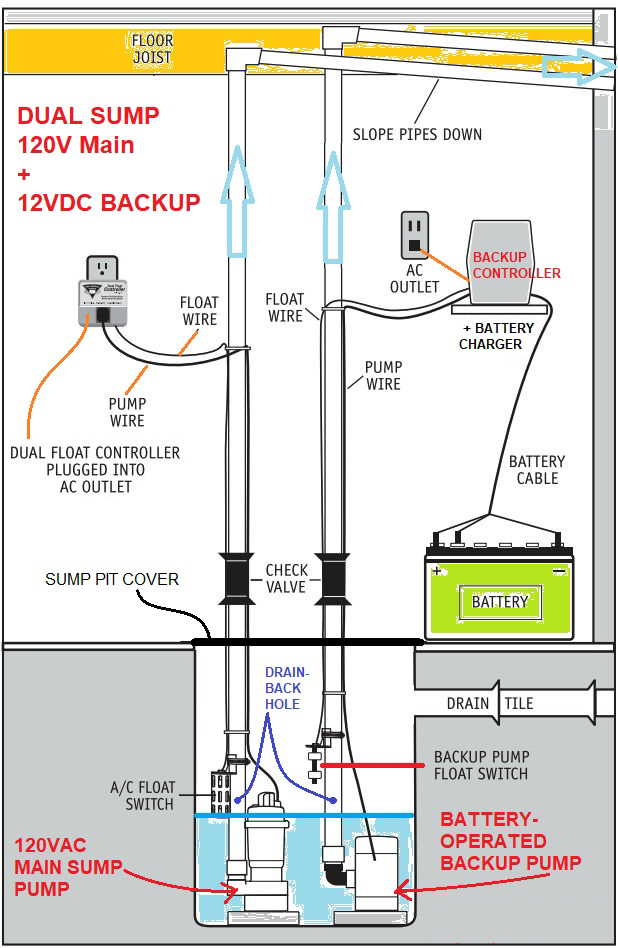
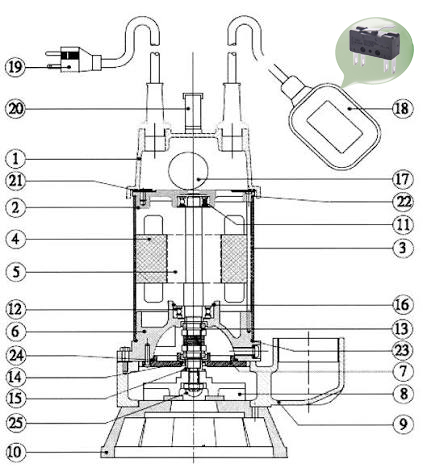
Sewage pumps typically detect changes in wastewater level using a float or mechanical level control mechanism. When the liquid level reaches a set height, a mechanical component displaces, actuating the actuator of a miniature micro switch, causing the internal spring and contacts to switch rapidly. Through this contact state change, the miniature micro switch converts the liquid level position into an electrical signal, which is then transmitted to the sewage pump control system.
This detection method achieves automatic start-stop of the sewage pump through a "mechanical displacement—signal conversion—control execution" logic. When the liquid level reaches the set position, the miniature micro switch switches contacts based on the mechanical change and sends a status signal to the control module. Compared to other methods, mechanical triggering provides clear position feedback. The DPDT Miniature Micro Switch, with its dual-contact switching structure, can provide multi-channel signal control, improving the flexibility and reliability of sewage pump system design.
DPDT Miniature Micro Switch Controls Pump Start and Stop
In the automatic control system of sewage pumps, one of the core functions of the miniature micro switch is to help the system determine start and stop: When the sewage level rises to the starting height, the level detection mechanism pushes the miniature micro switch contacts to switch, sending a start signal to the control module, and the sewage pump starts running. During operation, stable signal output avoids false alarms. As the sewage level drops to the stop range, the detection mechanism returns to its original position, the miniature micro switch switches again, and the control system stops the sewage pump based on the feedback, achieving automatic drainage control.
The DPDT Miniature Micro Switch provides flexible signal management capabilities through a double-break switching structure, enabling the control system to make accurate judgments based on the contact status, improving the stability of level control. For sewage pump equipment that operates for a long time, the switch needs to maintain reliable feedback to avoid failure to start or continuous operation due to abnormal signals. Therefore, the consistency of the miniature micro switch's action and the stability of its contacts are crucial to ensuring the normal operation of the equipment.
Reliable Signal Feedback Improves Sewage Pump Operation
Sewage pumps are typically in automatic control mode, and the stability of the liquid level detection signal directly affects system operation. The control module uses feedback from a miniature micro switch to determine water level changes and execute start/stop operations. The liquid level detection mechanism undergoes mechanical displacement with the water level, which the miniature micro switch converts into an electrical signal, enabling the sewage pump to operate automatically.
This explicit position feedback helps the control system accurately identify liquid level changes, preventing premature shutdown or continuous operation of the sewage pump due to signal anomalies. The miniature micro switch needs stable triggering performance and consistent action characteristics to ensure reliable feedback during long-term use, meet the control logic requirements of different sewage pumps, and improve system stability.
Key Advantages of Miniature Micro Switch for Sewage Pump Applications
Compact Size for Easy Integration
Sewage pump control systems need to perform level detection, signal transmission, and electrical connections within a limited space; therefore, the size of the detection element is crucial. The miniature micro switch features a compact design, allowing for flexible installation within level detection mechanisms and control components, reducing space occupation and increasing structural layout flexibility.
High-quality miniature micro switches, despite their small size, maintain stable responsiveness, meeting the frequent start-stop control requirements of sewage pumps and facilitating higher integration in equipment design.
Accurate Switching Performance for Liquid Level Detection
Automatic control of sewage pumps relies on accurate level judgment, and the switching performance of the miniature micro switch directly affects the detection effect. When the liquid level reaches the set position, the switch needs to trigger quickly and output a start signal; when the liquid level drops, it needs to switch states promptly to stop the sewage pump.
With stable contact switching and a defined stroke, the miniature micro switch reduces detection errors and improves control accuracy. The DPDT Miniature Micro Switch, with its dual-contact switching structure, can also meet the switching requirements of multi-state signals, improving system design flexibility.
High Mechanical Life for Frequent Pump Operations
Sewage pumps typically require frequent start-stop operations, therefore the miniature micro switch must withstand repeated switching actions over a long period. Insufficient mechanical life may lead to triggering instability or detection deviations, affecting equipment operation.
High-quality miniature micro switches have a mechanical life of approximately 500,000 cycles, maintaining consistent operational performance over a long period and reducing maintenance needs. Through reasonable structural matching and reliable manufacturing processes, the switch helps sewage pumps achieve more durable and efficient automatic control.
Conclusion
The DPDT Miniature Micro Switch plays a crucial role in sewage pump systems for level detection and start-stop control. As sewage systems evolve towards automation, sewage pumps face higher requirements for level detection accuracy, control stability, and long-term operational capability. With its miniaturized structure, precise detection capabilities, stable switching performance, and long mechanical life, the miniature micro switch has become a vital component in sewage pumps.
For sewage pump manufacturers, choosing a micro switch supplier with independent R&D capabilities, precision manufacturing processes, and a rigorous quality management system not only ensures stable product performance but also helps in developing more efficient and reliable automatic drainage equipment. In the future, Miniature micro switches will continue to improve equipment operating efficiency and product market competitiveness through structural optimization and manufacturing technology upgrades.
The Role of Subminiature Micro Switch in Truck Door Lock Detection
Why Sealed Subminiature Micro Switch Matters in Automotive Central Control Systems
Related Article