What Is a Three Circuit Micro Switch and How Does It Work?
The three circuit micro switch, with its unique multi-channel control features, has become the preferred core control unit for complex electrical systems. Compared to traditional single-circuit or dual-circuit micro switches, it can simultaneously control multiple signals in a single action, thereby demonstrating higher efficiency and reliability in intelligent equipment and safety control systems.
This article will delve into the definition, structure, operating principle, core features, and application value of the three-circuit micro switch, helping you fully understand the technical advantages and selection criteria of this high-performance micro switch.
What is a Three Circuit Micro Switch?
Definition of a Three Circuit Micro Switch
A three circuit micro switch is an electrical switch that can simultaneously control three independent circuits in a single action. It features three contact systems, each capable of performing a separate "on/off" or "toggle" operation, allowing it to simultaneously perform different circuit functions, such as starting, stopping, providing feedback signals, or providing alarms.
Compared to single-circuit (SPST) or dual-circuit (DPDT) micro switches, three circuit micro switches offer higher integration and stronger control capabilities. They are often used in complex systems requiring multi-signal linkage or multi-function interlocking control, such as industrial automation production lines, smart home appliances, medical equipment, and vehicle control systems.
This switch's advantages lie not only in its control capabilities but also in its ability to significantly reduce the number of switches and wiring complexity in the system, thereby improving system reliability and assembly efficiency.
Three-Circuit Micro Switch Structure
The internal structure of a three circuit micro switch consists of four main components:
Actuator: Responsible for receiving external mechanical force (such as a button, roller, lever, etc.) and transmitting the action to the internal contact mechanism.
Contact Mechanism: Consists of three sets of independent contacts, switching the circuit by switching between different states.
Spring Mechanism: Provides a snap-action response. When the actuator reaches a critical point, the internal contacts switch instantly, preventing arcing caused by slow motion.
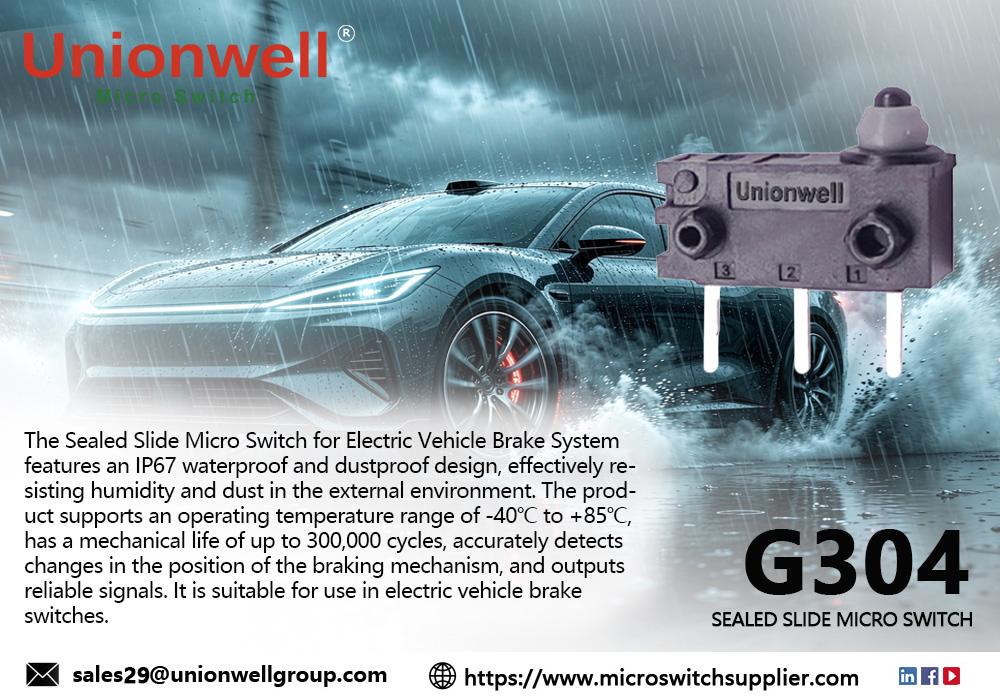
Sealed Housing: Encapsulated in high-strength plastic or metal, it is dust-proof, waterproof, and oil-proof. Some models can achieve an IP67 rating.
IP67-rated design means the switch can operate stably and long-term in harsh industrial environments such as high humidity, oil, and dust. This is particularly important for outdoor equipment, cold storage equipment, or industrial machinery.
How Does a Three Circuit Micro Switch Work?
The core of a three circuit micro switch is its snap-action sliding mechanism. When an external actuating force acts on the actuator, an internal spring releases energy at the instant it reaches a critical point, causing the three sets of contacts to switch almost simultaneously.
The advantages of this snap-action mechanism include:
Fast action, with a response time of less than 5 milliseconds;
High synchronization of the switching of the three circuits, with an error of less than 50 milliseconds;
Effectively avoiding signal instability caused by contact delay or vibration.
For example, in some automated equipment, a three-circuit switch can simultaneously activate the main control circuit, disconnect the auxiliary control circuit, and provide current status feedback to the control system.
After the actuating signal is released, the internal spring automatically resets, returning the contacts to their initial state. The entire operation process is stable and repeatable. This structure is ideal for scenarios requiring multi-channel logic linkage or interlocking control, such as motor forward and reverse control, safety door interlocking, and cooling system switching.
Key Features of Three Circuit Micro Switch
Three-Circuit Synchronous Control Design
A single switch can switch three circuits simultaneously, with a response delay of less than 50ms.
This synchronous switching design significantly reduces synchronization errors and maintenance costs associated with multiple switches within the system.
High-Reliability Contact Design
Silver alloy or gold-plated contacts effectively reduce arcing and contact resistance, maintaining stable conduction even with low-current control signals.
Snap Action
An internal spring mechanism ensures fast and crisp actuation.
This design also prevents contact problems or delayed switching, improving system response.
High Protection Rating (IP65–IP67)
Protected against moisture, oil mist, and dust, it is suitable for use in complex environments such as industrial machinery, kitchen equipment, and automotive exteriors.
Long Life and Wide Operating Temperature Range
Mechanical life of ≥150,000 cycles, electrical life of 150,000 cycles (20 cycles/minute), meeting the stability requirements of long-term industrial equipment operation.
It operates stably in temperatures ranging from -40°C to +85°C, making it suitable for a wide range of equipment in most scenarios.
Typical Applications of Three-Circuit Micro Switches
Industrial Automation Equipment
In automated production lines, three-circuit micro switches are commonly used for mechanical limit detection, reverse control, and multi-point signal feedback systems.
For example, in a robotic arm control system, they can simultaneously perform the following tasks:
Detect arm position arrival signals;Stop motor operation;Feedback position signals to the PLC system.
This multi-channel linkage design allows multiple programs to execute simultaneously without interfering with each other, greatly improving equipment efficiency and safety.
Automotive and Transportation
In vehicle electronic control systems, three circuit micro switches are used in power door locks, power seats, and charging systems.
Their highly waterproof and shockproof design ensures stable operation in rain, oil, and high-temperature environments, providing electrical protection for the entire vehicle.
Safety and Alarm Devices
In equipment such as elevators, protective cabins, and machine tool protective doors, three-circuit micro switches can implement the three-way linkage function of triggering, feedback, and alarming.
For example, if a locked security door is unexpectedly opened, the main circuit receives a signal and immediately disconnects, activating the alarm system.
Simultaneously, a status signal is fed back to the control panel to determine other security door signals. This type of application requires extremely high security and stability, and the three-circuit design perfectly solves the problem of multi-signal synchronization.
Technical Parameters of Three-Circuit Micro Switches
So, how do three circuit micro switches maintain high stability and long life in a changing environment? These technical parameters clearly demonstrate this (using the G307B series micro switch as an example):
|
Allowable linear operating speed |
1~500mm/s |
|
Operating Frequency |
120 cycles/minute |
|
Contact Resistance(Initiative) |
≤75mΩ |
|
Insulation Resistance(at 500VDC) |
100MΩ Min |
|
Vibration durability |
10~55Hz, Double amplitude 1.5mm |
|
Withstand voltage |
AC100V,50/60Hz,1Min |
|
Storage Temperature |
-40℃-+85℃ |
|
Storage Humidity |
95% RH Max |
|
Service Life Electrical |
150,000/cycles(20cycles/min) 50mA 18VDC 50μA 5VDC |
|
Service Life Mechanical |
150,000/cycles(30cycles/min) |
FAQ
Q1: Can three-circuit micro switches be used with both AC and DC power?
A1: Yes. Most models are compatible with voltages ranging from AC125V–250V or DC12V–30V, making them suitable for a variety of power supply environments.
Q2: Does the waterproof structure of a three-circuit micro switch affect sensitivity?
A2: No. The high-quality sealing design ensures waterproofing while maintaining the actuator's sensitive action, ensuring stable trigger points and response speeds.
Q3: How does the clip-slide mechanism of a three-circuit micro switch work?
A3: The clip-slide mechanism uses spring preload to achieve "quick-switching" action, ensuring instantaneous contact switching at critical points, improving repeatability and reliability.
Q4: Why are three-circuit micro switches preferred in industrial equipment?
A4: They enable multi-channel signal control or feedback within a single structure, reducing the number of switches and wiring complexity, and improving system integration efficiency and reliability.
Q5: Can three-circuit micro switches be used in safety interlock systems?
A5: Yes. It can simultaneously process multiple signal feedback channels, ensuring reliable safety interlocking when devices are turned on or off.
Conclusion
The three-circuit micro switch is a key component in modern electrical and automation control systems.
Its three-channel simultaneous switching capability enables complex systems to implement multi-signal linkage and safety interlocking within a single mechanism.
Its instantaneous action structure, high protection level, and high reliability design offer broad application potential in industries such as industry, home appliances, and automotive.
With the development of Industry and smart manufacturing, the three-circuit micro switch, which designed by micro switch manufacturer will continue to play a core role in multifunctional control systems, providing equipment manufacturers with more efficient, safer, and more intelligent control solutions.
Applications of Sealed Micro Switch NO Type in Automotive
What is a Refrigerator Door Switch and Why Is It Best to Have ATEX Certification?
Related Article