Common Types of Micro Switches and Their Differences
A micro switch is a basic electrical component widely used in our daily lives and industrial production. Despite its compact size, it plays an irreplaceable role in circuit control and safety protection. Therefore, understanding the characteristics and differences of different types of micro switches can help home appliance users choose safer and more durable products. For manufacturers, buyers, and engineers, it is also crucial for reducing costs and improving equipment reliability.
This article will comprehensively analyze common micro switch types and their key differences, and, based on application scenarios, help you better understand and select the appropriate micro switch.
What is a Micro Switch?
A micro switch is a small mechanical electrical switch whose core features are snap action and high reliability. Its operating principle is that a minimal external force quickly flips an internal spring, causing the contacts to open and close instantly.
Definition: A small mechanical electrical switch capable of rapidly switching circuits.
Basic Operating Principle: External force acts on the actuator, instantly actuating a spring, thus completing a circuit connection or disconnection.
Common Features:
Fast response speed, with virtually no latency.
Long mechanical life, typically reaching hundreds of thousands or even millions of cycles.
Compact structure, suitable for confined spaces.
Stable and reliable output signal, with strong anti-interference capabilities.
As a result, micro switches are widely used in home appliances, automobiles, industrial equipment, security systems, and other applications.

Common Types of Micro Switches
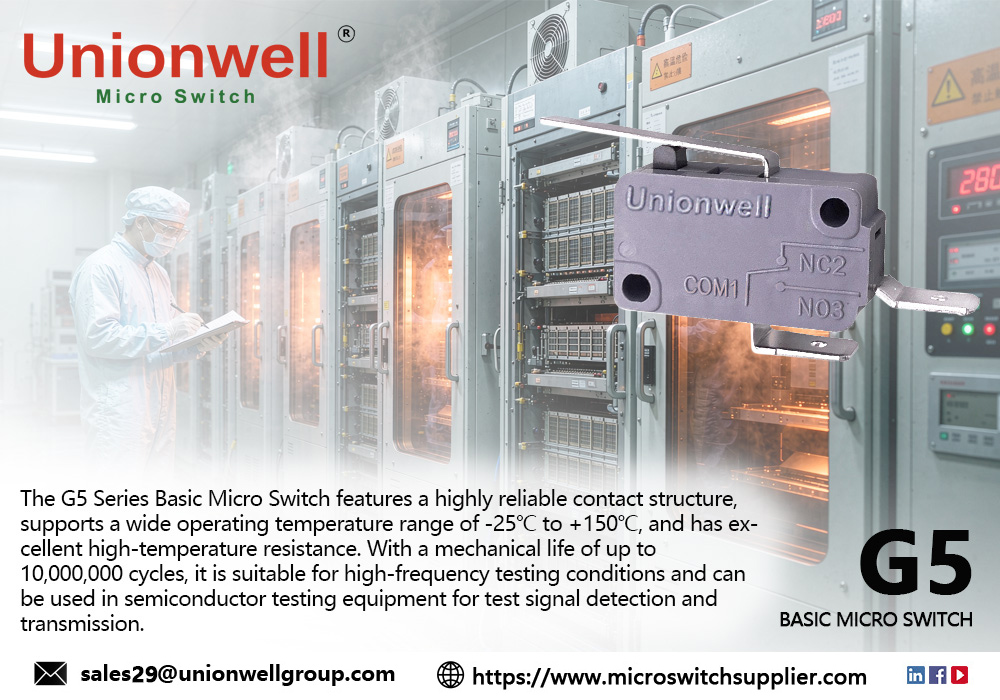
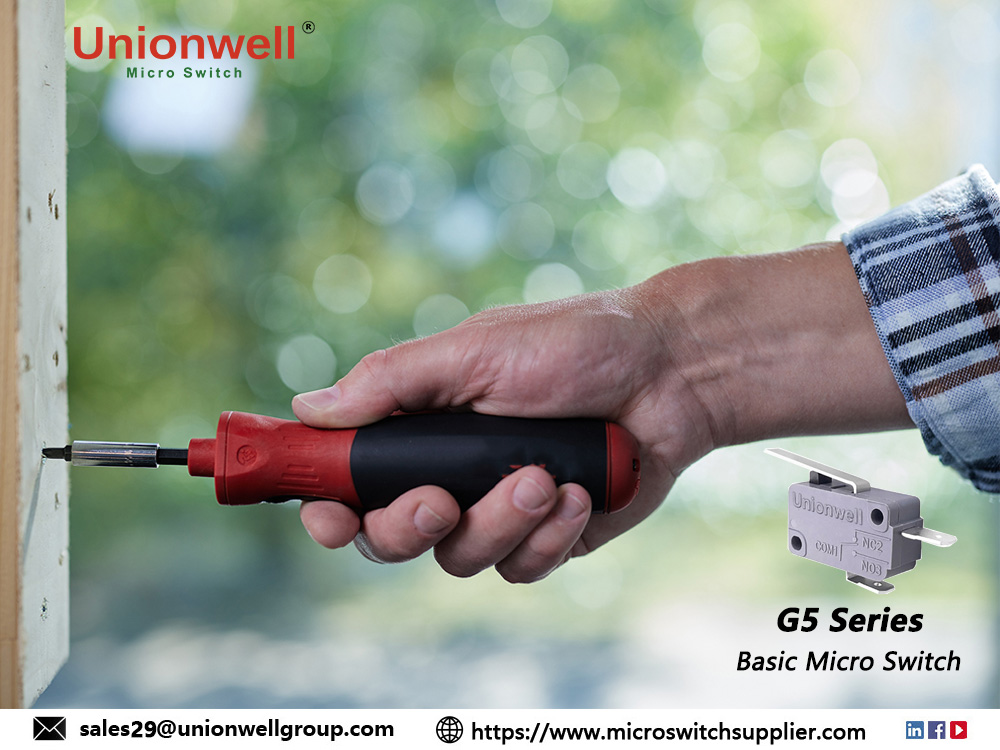
Basic Micro Switch
Features:
This type of micro switch has the most common structure and offers a wide variety of terminal blocks. Due to its mature design, it combines low cost, long life, and high reliability. Its stable electrical performance makes it suitable for most light-load situations.
Applications:
It is widely used in various fields:
In household appliances, basic micro switches can control the door opening of rice cookers and microwave ovens, and start and stop control of water heaters.
As door lock switches, they can detect the door's open or closed state to determine whether it is properly triggered, ensuring user safety.
In toys, they can control the closing of toy car doors.
In office equipment, they are mainly used for paper detection in copiers and printers.
Miniature Micro Switch
Features:
Compared to basic micro switches, miniature micro switches are smaller and more space-efficient. Both have high trigger sensitivity and fast response speed, but miniature micro switches can operate stably under medium loads in some situations.
Applications:
In food blenders, miniature micro switches primarily detect whether the lid is fully closed, ensuring safe operation.
In some medical devices, they also primarily detect the position of instruments to ensure safe startup conditions.
They are also sometimes used in office equipment, primarily for button detection in scanners and fax machines.
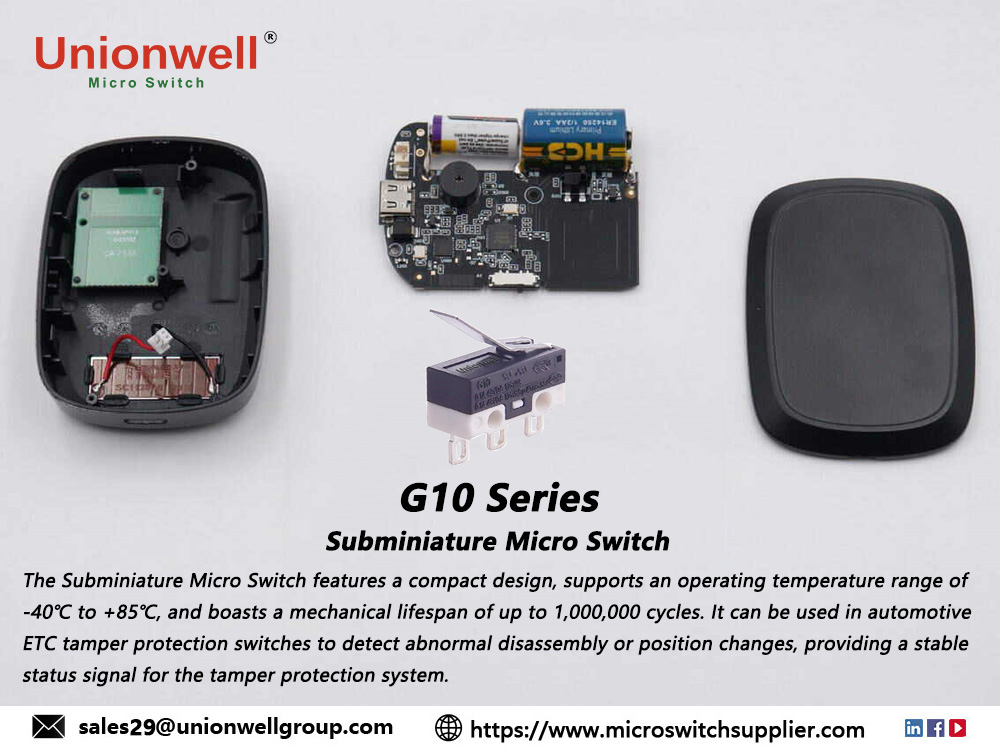
Subminiature Micro Switch
Features:
Compared to miniature micro switches, this type of switch is smaller in size, making it more suitable for electronic devices with extremely tight space requirements. Furthermore, its lightness makes it suitable for low-current and low-voltage applications.
Applications:
It can be found in smart home remote controls and sensors, primarily for button detection.
Some wearable devices, such as smart bracelets and health monitors, also rely on it.
It also functions as a button in portable digital products.
Waterproof/Sealed Micro Switch
Features:
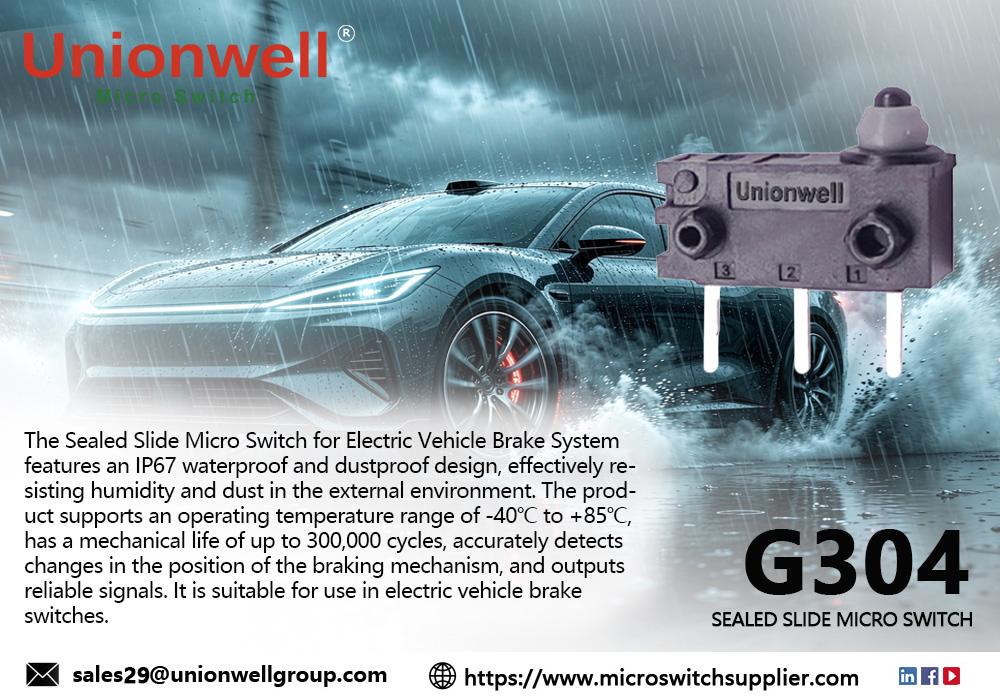
This type of switch has an IP67 rating, meaning it is completely dustproof and can withstand short-term submersion in water. It is typically manufactured using a special sealing structure to ensure humidity and corrosion resistance. These properties make this type of micro switch suitable for long-term stable operation in harsh environments.
Applications:
In automobiles, it controls window control and door lock detection.
In some electric vehicles, it handles power startup and protective control. It is also indispensable in automatic doors, agricultural equipment and other outdoor appliances.
Heavy-Duty Micro Switch
Features:
Heavy-duty micro switches are designed by micro switch manufacturers to withstand high currents and voltages. They also offer a long service life and high wear resistance, making them an ideal choice for high-intensity industrial applications.
Applications:
In industrial machinery, they are primarily used on conveyors and presses to verify that items passing over them are properly positioned.
In lifting equipment, they control elevator doors and automatic lifts to prevent safety issues.
In power equipment, they primarily monitor high-voltage switches, ensuring they are in a safe state before starting them.
Key Differences Between Micro Switch Types
Size Differences
Basic micro switches are moderately sized and are more suitable for standard appliances and general-purpose equipment.Miniature micro switches are compact and flexible, making them more suitable for space-constrained environments.Subminiature micro switches are more compact and miniaturized, making them more suitable for precision electronics and portable devices.
Load Capacity Differences
Basic, miniature, and subminiature micro switches are generally used only in light- or medium-load environments; heavy-duty micro switches, on the other hand, can handle high-load applications and withstand high currents.
Environmental Adaptability
Basic micro switches are more suitable for dry indoor environments; waterproof/sealed micro switches can withstand humid, dusty, or outdoor environments.
Lifespan and Cost
Although heavy-duty and waterproof micro switches are more expensive, they have a long lifespan and are suitable for industrial use or specialized environments. Basic micro switches offer a low cost and excellent value, making them suitable for everyday appliances. Differences in Application Scenario:
In home appliances, basic and miniature micro switches are the most common;
In automotive and outdoor environments, waterproof/sealed micro switches are essential;
In industrial environments, heavy-duty micro switches are most suitable.
In summary, we can distinguish them based on the following aspects:
| Cost-effectiveness | Lifespan | Application Scenario | Size | Current and voltage load capacity | |
| Basic micro switch | High cost performance |
Electrical:≥100,000 cycles Mechanical:≥1,000,000 cycles |
Home appliances, toys | Standard |
0.1A 48VDC 0.1A 125/250VAC 5(2.5A) 125/250VAC |
| Miniature micro switch | Medium |
Electrical:≥50,000次 Mechanical:≥1,000,000 cycles |
Food mixers, office equipment | Small |
5(3)A 125/250VAC 5A 125/250VAC 5A 30VDC |
| Subminiature micro switch | Medium |
Electrical:10,000~100,000 cycles Mechanical:≥500,000 cycles |
Smart home, handheld devices | So small |
0.1A 125/250 VAC 0.1A 48VDC |
| Waterproof/Sealed micro switch | Medium to low |
Electrical:≥100,000 cycles Mechanical:≥500,000 cycles |
Automobiles, electric vehicles, outdoor equipment | Medium to small |
0.1A 125/250VAC 0.1A 48VDC 3A 12VDC |
| Heavy-Duty micro switch | A little low |
Electrical:≥50,000 cycles Mechanical:≥2,000,000 cycles |
Industrial machinery, elevator equipment | Standard to large |
0.5A 250VDC 0.5A/5A 250VAC |
Conclusion
In summary, despite their small size, micro switches come in a wide variety of types and functions. From basic, miniature, and subminiature models to waterproof, sealed, and heavy-duty models, they differ significantly in size, load capacity, environmental adaptability, and lifecycle cost.
Choosing the right micro switch which designed by the micro switch manufacturer, not only impacts the safety and reliability of the device but also directly influences the user experience and the product's market competitiveness. Manufacturers and buyers should consider the application scenario, electrical parameters, and environmental conditions when selecting the most suitable type.
Proper micro switch selection is a key step in ensuring stable product operation, extending product life, and reducing maintenance costs. It is also an important foundation for the future development of intelligent and high-performance devices.
Why Car Door Locks and Window Control Systems have Sealed Micro Switch?
What Functions Does the Micro Switch Control in a Claw Machine
Related Article