Basic Micro Switch VS Waterproof Micro Switch: Their Differences And Use Cases
Micro switches, as small and efficient electrical control components, play a vital role in modern home appliances, automobiles, smart devices, and other industries. With the diversification of application scenarios and the increasing complexity of usage environments, basic micro switches and waterproof micro switches with protective features have gradually established their respective niches in different markets.
This article will comprehensively analyze the differences between basic micro switch and waterproof micro switch from multiple perspectives, including their definition, characteristics, advantages and disadvantages, application scenarios, and future trends. This will help readers better understand the differences between basic micro switch and waterproof micro switch and make an appropriate choice based on their specific needs.
What is a basic micro switch?
Definition and Principle
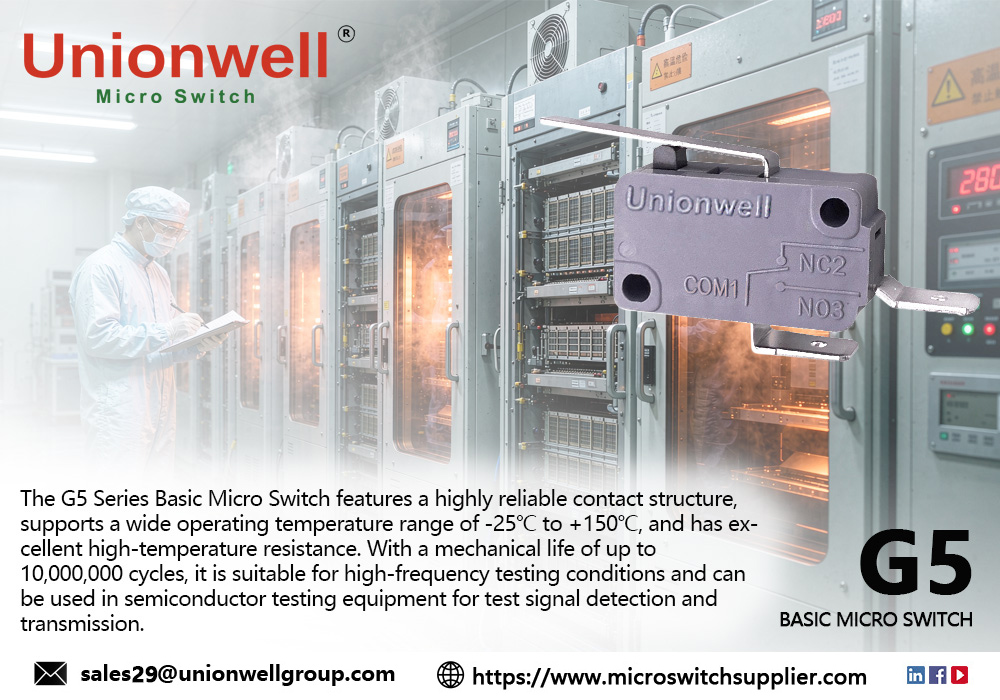
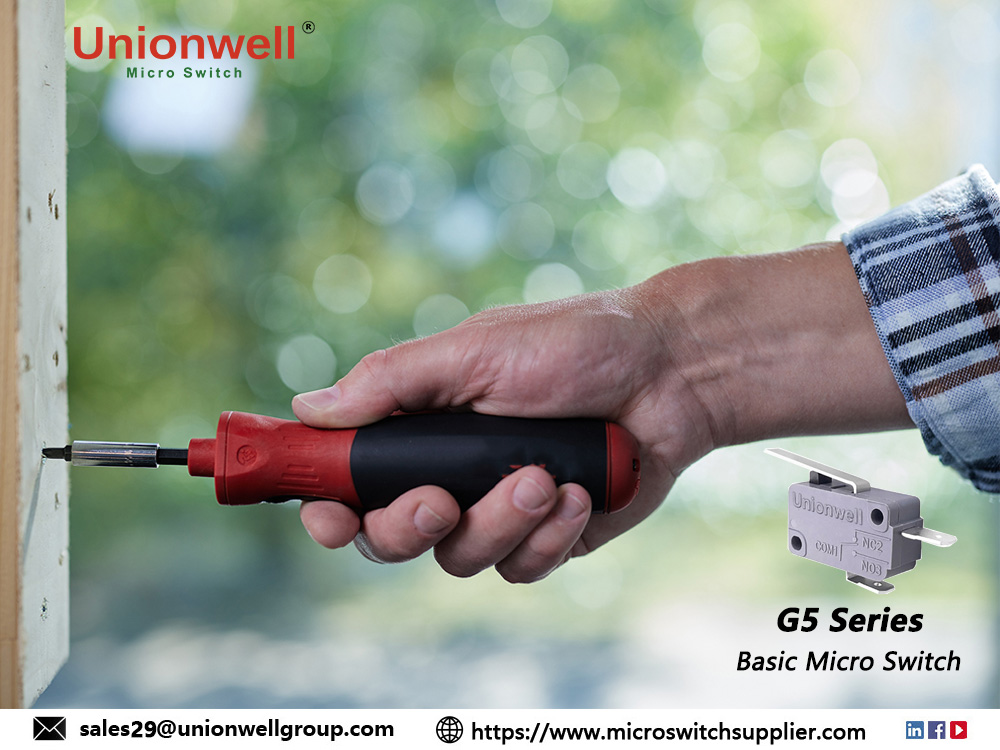
A basic micro switch is a precision electrical component that uses a tiny mechanical stroke to switch a circuit on and off. It typically contains a spring, contacts, and an actuator, enabling it to rapidly change contact state under minimal external force. Its fast action and sensitive response make it widely used in both industrial and household applications.
Basic Characteristics
Small size: Suitable for installation in space-constrained equipment.
High sensitivity: Low triggering force required, resulting in a fast response.
Long lifespan: High-quality models can achieve a mechanical lifespan of ≥10,000,000 cycles.
Affordable: Suitable for large-scale assembly.
Typical Applications
Electric clothes drying racks: Used for limit detection of motor lifts.
Household appliances: Such as microwave oven door controls and coffee machine start-up detection.
Office equipment: Paper detection in copiers and printers.
Automotive door locks: Detect door opening and closing to enhance security.
What is a Waterproof Micro Switch?
Definition and Principle
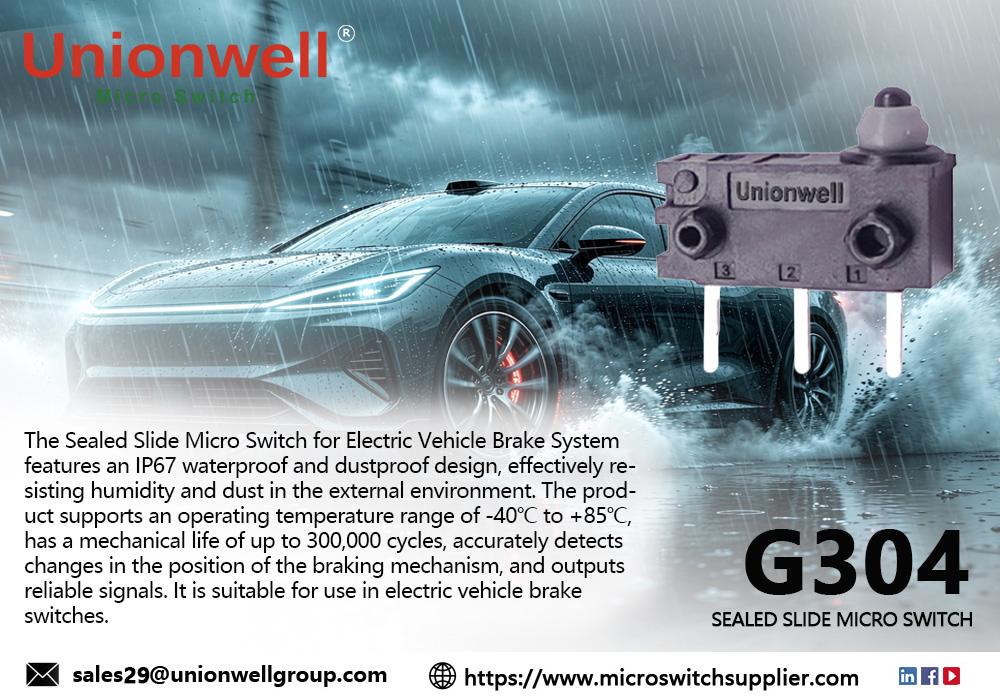
A waterproof micro switch, as the name suggests, is not only a precision electrical component that uses a tiny mechanical stroke to open and close a circuit, but also a micro switch with specially designed structure and materials for waterproof and dustproof properties. Its protection ratings are commonly IP65 and IP67, allowing it to operate stably in humid, high-temperature, dusty, and oily environments.
Features
Strong protection: Effectively resists the intrusion of moisture, dust, and oil.
Adaptability: Enables long-term stable operation in complex environments.
High reliability: Reduces failure rates caused by environmental factors.
Typical Applications
Smart toilets: Used for flush control and safety protection.
Kitchen appliances: High-temperature and high-humidity appliances such as air fryers and rice cookers.
Outdoor security equipment: Access control systems and signal detection in cameras.
Automotive electronics: Used in engine control, door and window systems, and other components requiring waterproof and dustproof properties.
Advantages and Disadvantages of Basic Micro Switches
Advantages
Low cost and widespread adoption, suitable for price-sensitive products and large-scale production;
Small size and flexible installation, suitable for equipment layouts in confined spaces;
High sensitivity, triggering with a slight movement, and precise control.
Disadvantages
Lack of waterproof and dustproof features: Susceptible to moisture and dust, causing failure.
Poor environmental adaptability: Reliability is limited in harsh environments such as kitchens, bathrooms, and outdoor equipment.
Lifespan is affected by the environment: High humidity or high temperature environments accelerate aging and failure.
Advantages and Disadvantages of Waterproof Micro Switches
Advantages
High protection rating: Waterproof and dustproof up to IP65/67, suitable for harsh environments.
Stronger stability: Remains stable even in humid, hot, and outdoor environments.
Suitable for smart devices: Supports complex functions, especially critical for devices with high security requirements.
Disadvantages
Slightly higher price: Less cost-effective than basic micro switches.
Long construction time: Due to the complex structure, the production process is longer and the construction period is slightly longer.
Slightly lower sensitivity: Some models require greater trigger force and their response speed is slightly slower than basic micro switch.
Comparative Analysis of Basic Micro Switches and Waterproof Micro Switches
Application Comparison
Basic micro switches are more suitable for indoor, dry environments, such as home appliances and office equipment; waterproof micro switches are primarily used in humid, high-temperature, or outdoor environments, such as smart toilets, outdoor security systems, and automotive electronics.
Lifespan Comparison
Basic micro switches have a mechanical lifespan of ≥10,000,000 cycles and an electrical lifespan of approximately 100,000 cycles;
Waterproof micro switches generally have a mechanical lifespan of 500,000 cycles, and an electrical lifespan similar to basic micro switches, approximately 100,000 cycles.
Safety and Reliability Comparison
Basic micro switches are capable of performing all tasks in standard environments; waterproof micro switches offer significant advantages in complex environments, preventing short circuits or failures caused by moisture and dust.
Based on the above comparisons, we can provide a brief summary in the following table:
|
Basic micro switch |
Waterproof micro switch |
|
|
Basic Features |
Small size and high sensitivity |
Strong protective performance and strong adaptability |
|
Lifespan |
Electrical life: ≥100,000 cycles Mechanical life: ≥10,000,000 cycles |
Electrical life : 100,000 cycles Mechanical life: 500,000 cycles |
|
Price |
Low cost, high cost performance |
A litter more expensive than a basic micro switch |
|
Reliability |
Can work stably in normal environment |
Can also be used in outdoor or wet environments |
|
Product Certification and Compliance |
UL、CUL、ENEC、CE、CQC、RoHS,etc. |
IP65/IP67、UL、CUL、ENEC、CE、CQC、RoHS,etc. |
|
Production period |
Slightly shorter |
Slightly longer |
|
Application Scenario |
Electric clothes drying rack limit detection, microwave oven door control, printer paper detection, etc. |
Smart toilet flushing control, signal detection in access control, new energy vehicle door and window systems, etc. |
How to choose the right micro switch?
Based on usage environment
If the device is used in a dry indoor environment, a basic micro switch is recommended. For humid, outdoor, or demanding environments, a waterproof micro switch is recommended.
Based on cost and budget
If you need a cost-effective product, a basic micro switch is recommended. For high-end equipment or equipment that requires long-term use, a waterproof micro switch is preferred.
Based on certification and compliance
It is recommended to choose products with UL, CUL, CE, CQC, ENEC, and RoHS certifications. For waterproof micro switches, it is also important to check whether they are IP65 or IP677 certified, which is one way to verify the quality of the micro switch.
Product Development Trends
After comparing the differences between basic micro switch and waterproof micro switch, we can also understand their potential future developments:
Intelligent Integration with IoT: Micro switches are increasingly being integrated with smart sensors, and micro switch manufacturers may design them to enable remote monitoring and data feedback.
Longer Lifespan: They meet the needs of applications in extreme environments with high frequency of use.
Environmental Compliance: Compliance with environmental regulations such as RoHS and REACH will be a greater priority in the future, promoting sustainable development.
Conclusion
Basic micro switch and waterproof micro switch each have distinct advantages and limitations. Basic micro switches are more suitable for high-volume products in indoor and conventional environments, offering high cost-effectiveness and higher sensitivity. Waterproof(IP65/IP67) micro switches, on the other hand, excel in harsh environments such as humidity, high temperatures, and outdoor environments, significantly improving device safety and stability.
When choosing a suitable product, users should comprehensively consider the application environment, cost budget, lifespan requirements, safety, and certification standards. Choosing the right product not only ensures stable operation but also reduces long-term maintenance costs and enhances the end-user experience.
What Is a Waterproof Micro Switch and Why It Matters in Electric Cars?
Why Your Gas Stove Needs a High-Quality Air Pressure Micro Switch
Related Article