Micro Switches vs. Limit Switches: Differences and Applications
Micro switches and limit switches are commonly used electronic components in household appliances, transportation, consumer products, and industrial machinery. Although they are called "switches", but in the working principle, characteristics and applications have their own advantages and differences, this article will provide you with a detailed introduction to the differences between micro switches and limit switches and application scenarios.
What is a Micro Switch?
Overview
Micro switches, also known as snap action micro switches, are normally open and normally closed switches used to detect an object or to control the movement of an object and require very little operating force to activate.
Features
Micro switches are characterized by their small size and compact internal structure, therefore there are very suitable for use in electronics, consumer products and compact products. Typically capable of withstanding millions or even tens of millions of operations, micro switches are rated for low to medium currents (0.1-5 A) at low voltages and excel in signal level switching and fine control tasks.

What is a Limit Switch?
Overview
Limit switches are safety and position detection devices, generally larger in size than micro switches, that are primarily used to determine the end of travel of industrial machinery, thereby preventing overspeed operation and machinery damage.
Features
Limit switches are available in a variety of actuator types, including spring, roller, plunger, and panel mounting plunger, to accommodate different mechanical interfaces and operating forces. Many limit switches typically have protective housings, such as Metal or plastic, that are dust, water and oil resistant for use in harsh and hazardous environments.
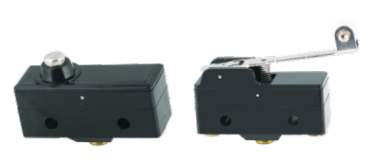
The Relationship Between Micro Switch and Limit Switch
Micro switches are called from the structure of the switch. Limit switches are called from the purpose of the switch. Most limit switches are micro switches. Technically, micro switches can be used in limit switch assemblies. In fact, in many applications, limit switches use micro switches internally as their core switching mechanism.
As a result, every micro switch can be used as a limit switch in appropriate situations, for example, when used to detect position limits. Not every limit switch, however, uses a micro switch mechanism internally, especially for heavy-duty or high-current designs. In addition, some limit switches are heavy-duty limit switches with slow-action mechanisms.
Key Differences Between Micro Switch and Limit Switch
Size and Actuator Force
Micro switches: Generally half the size of limit switches with low operating forces, typically as little as 6 gf.
Limit switches: Large size, high brake operating force, typically 350 gf.
Mechanical Life and Durability
Micro switches: Long life, mechanical life typically in the millions or even tens of millions of cycles. Housing ruggedness is low compared to limit switches.
Limit switches: Rated for fewer cycles, with mechanical life typically around 200,000, but with higher mechanical ruggedness in harsh environments, thanks to thicker housings and reinforced actuators.
Current and Voltage Ratings
Micro switches: typically handle 0.1-5 A at control voltages < 250 VAC.
Limit switches: Rated for 15 A or more at industrial voltages up to 600 VAC.
|
Feature |
Micro Switch |
Limit Switch |
|
Size |
Compact, small |
Usually larger |
|
Sensitivity |
High sensitivity; low actuation force |
Requires more actuation force |
|
Application |
Precision control in small devices |
Position control in industrial equipment |
|
Durability |
Moderate |
High, often ruggedized |
|
Current and Voltage Ratings |
Low voltage(< 250 VAC) and low current(0.1-5A) |
High voltage(600 VAC) and high current ( 15 A ) |
|
operating force |
Low |
High |
Applications of Micro Switches
- Home Appliances: Door interlocks detection of microwave ovens and washing machines
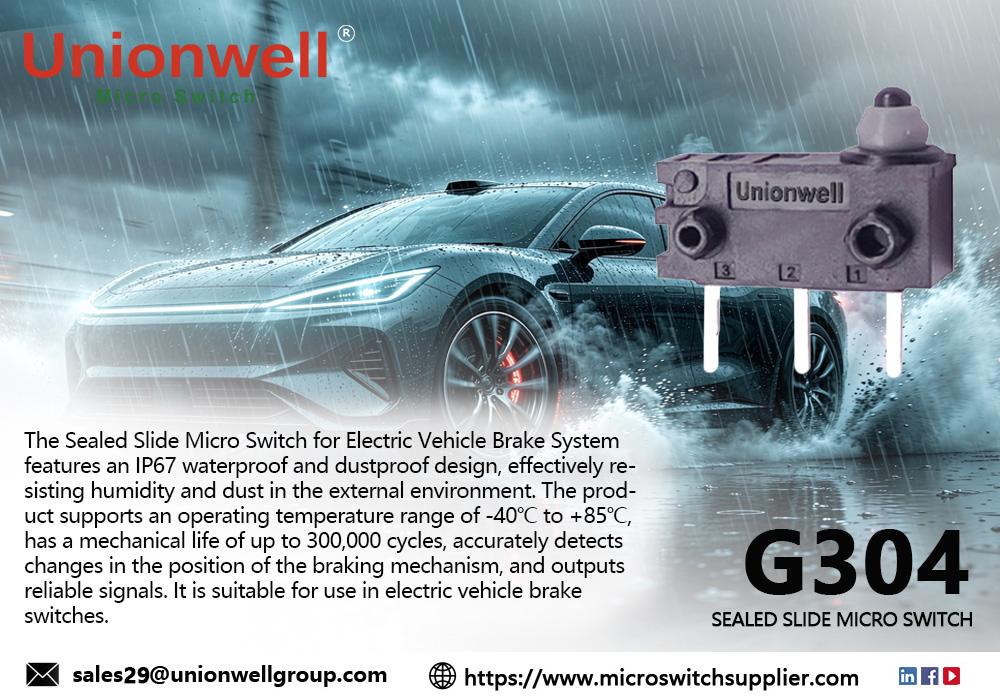
- Automotive Systems: Door detection, seat belt mechanisms, and gear shift interlocks often use micros witches for driver and passenger safety.
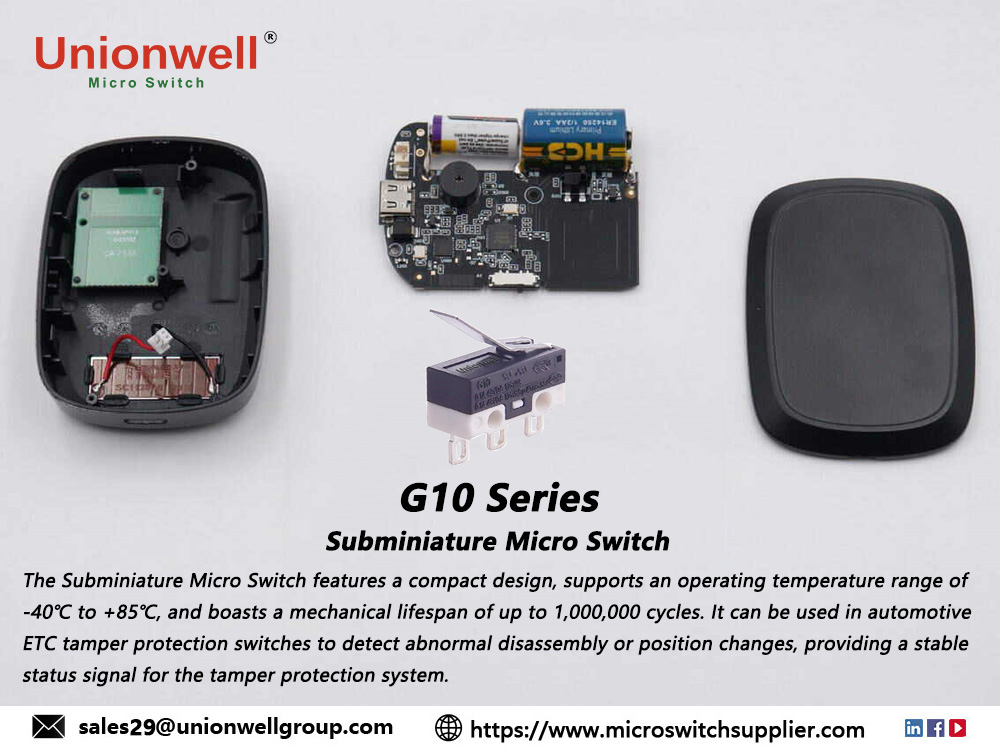
- Safety Systems: Elevator door sensors, tamper switches in alarms.
- Industrial Control: Valve position detection, conveyor belt item counting.
- Medical Devices: Control panels for diagnostic equipment and infusion pumps utilize micro switches to ensure reliability over millions of cycles at low currents.
Applications of Limit Switches
- Industrial Machinery: CNC machine axis limits, conveyor belt stop/start controls.
- Transportation: Usually used to elevator car position detection and control of cruise ship gangways, to ensuring transportation safety and convenience.
- Heavy-Duty Use: Cranes, hoists, and robotic arms to prevent over-travel.
How to select a Micro Switch or Limit micro switch supplier
When selecting a supplier or manufacturer, prioritize the following criteria:
Safety Certifications
Require the supplier to provide certifications and accreditations such as ISO 9001, UL, cUL, CE, ENEC. These certifications attest to the rigor of the manufacturing process and the safety of the product, ensuring that the product and production comply with international safety standards.
Customization
Select a manufacturer that offers customization from actuator options to wiring configurations, also the materials for actors, terminals and housings. This facilitates you to choose the most suitable micro switch for your product.
Technical Support and Documentation
Ask your supplier to provide detailed datasheets, CAD models, wiring diagrams and application guidance documents, which will help you judge their R&D capability and professionalism.
Production Capacity and Lead Time
Evaluate the supplier’ s manufacturing scale, minimum order quantities (MOQs), and delivery schedules to align with your project.
After-sales Service
Confirmation of warranty time, replacement policy and local technical support and inclusion of relevant service regulations in the contract.
Cost‑Performance Balance
With years of accumulation and development, China's manufacturing industry is a provider of cost-effective products. Choosing China micro switch manufacturers, especially Unionwell, will provide you with the cheapest price and highest quality. Unionwell has comprehensive safety certificates including ISO, IAFT UL, CE,ENEC, and even RoHS. In addition, Unionwell has professional R&D department and after-sales department, the production and test have been fully automated by 90%, which can guarantee the quality of micro switches and service quality at the same time.
Conclusion
By understanding the unique features of micro switches and limit switches and their applications, you can select more appropriate switches for your products to enhance their safety and durability. Partnering with a specialized supplier- Unionwell that meets stringent quality, customization and support standards will further enhance the performance and reliability of your final product. Contact us now for free samples.
Why Sealed Micro Switches Are Best for Waterproof and Dustproof Devices
6 Types Lever of Micro Switches and How to Change the Micro Switch Lever
Related Article