What Happens When the Basic Micro Switch in Your Dishwasher Fails?
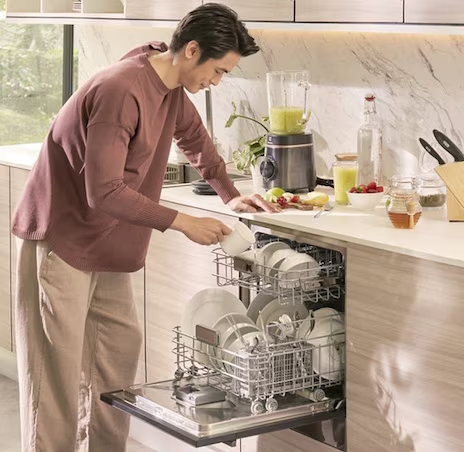
Dishwashers that have been used for a long time may experience problems such as failure to start, door lock failure, wash cycle interruptions, or drainage failure. When troubleshooting these issues, many repair technicians often first check the main control components, such as the electronic control board, pump, and valves, but can easily overlook malfunctions in the basic micro switch.
So, what happens when a basic micro switch fails in a dishwasher? This article will deeply analyze the function of the basic micro switch in a dishwasher system, its symptoms, common causes, detection methods, and selection criteria, to help you fully understand the importance of this core component.
Understanding the Function of the Basic Micro Switch in a Dishwasher
Definition and Working Principle
A basic micro switch is a small mechanical switch that switches an electrical circuit using an internal spring and an actuator mechanism. Its principle is based on a "momentary action" mechanism: when a certain external force is applied (such as a door lock closing or a float rising), the internal spring drives the contacts to switch instantaneously, providing signal feedback or circuit control.
This switch typically features high sensitivity, high repeatability, and fast response speed, and is widely used for safety monitoring and status feedback in household appliances.
Function in Dishwasher Electronic Control Systems
Dishwashers basic micro switches primarily serve as signal triggers and logic decision nodes:
Signal triggering: Detects whether the door is fully closed or the water level has reached the set height;
Status detection: Verifies that components such as pumps and valves are operating correctly;
Action confirmation: Feeds detection results back to the main control board to ensure program execution is logically sequenced.
Typical Applications
Door micro switch: Prevents the door from opening during washing, ensuring safety;
Water level control feedback: Activates a micro switch via a float mechanism to control the upper water level limit;
Drain pump or inlet valve control: Assists the electronic control system in precisely controlling the on/off timing of the water flow.
These seemingly small actions form the logical closed loop of the dishwasher's safety and control system.
Common Symptoms When the Basic Micro Switch Fails
1. The dishwasher fails to start or stops mid-cycle
When the basic micro switch used to detect the door lock fails, the main control system will not recognize the "door securely closed" status signal. As a result, even if other components are intact, the dishwasher may not start or may suddenly stop during operation. In this case, the program control logic defaults to a "safety interrupt" state to prevent water leaks or electrical hazards.
2. Unable to drain water or abnormal water inflow
If the basic micro switch that controls the water level or valve fails, the control module may not receive correct feedback signals, leading to system misjudgments. This abnormality manifests as the dishwasher remaining in the "waiting for water flow" or "draining" cycle for extended periods, or even triggering a timeout protection.
3. Abnormal noise or repetitive operation
Oxidation or wear of the contacts can cause poor contact in the basic micro switch, resulting in the pump or motor starting and stopping frequently. This "chattering" signal can cause abnormal system noise, increase mechanical load, and shorten the life of the appliance.
4. The control panel displays an error code.
Many dishwasher brands will display an error code indicating a micro switch failure. While the control panel still powers on, the cycle is interrupted. Design engineers or repair technicians should first check the status of the basic micro switch before diagnosing an "electronic control failure."
Why the Basic Micro Switch Fails in Dishwashers
1. Long-term Mechanical Fatigue and Wear from High-Frequency Actuation
Micro switches are typically designed to last over 1,000,000 mechanical actuations, but dishwashers can exceed this lifespan after frequent daily use. Prolonged physical actuation can cause spring fatigue, weakened return force, or loose contacts. When the actuator loses its original elasticity or precision, the probability of signal delays or false triggering increases significantly.
2. Corrosion and Detergent Accumulation Caused by Environmental Factors
Dishwashers are exposed to high humidity and high temperatures year-round. Detergent vapors, condensation, and trace residue can penetrate the switch, causing oxidation of the metal contacts, rusting of the spring, or sluggish actuation.
These factors can ultimately lead to poor contact or signal distortion, especially after extended periods of downtime, which can cause "first-action failure."
3. Improper Installation Position or Structural Design
If the switch is installed too tightly, offset, or at an incorrect angle, the actuation stroke will be abnormal, and the contacts may not fully release. For design engineers, accurate calculation of the operating force, release travel, and lever ratio is crucial during the structural design phase. These factors directly determine the reliability and service life of a micro switch.
4. Current Surge and Contact Erosion
When a micro switch is used to control a solenoid valve or motor start signal, there are special circumstances where the transient current surge may exceed the rated value, causing contact erosion or sticking.
In this case, possible solutions include:
Replacing the contact with an alloy material (such as AgNi or AgCdO) that offers high current tolerance and arc resistance;
Installing an RC suppression circuit or relay protection module in the solenoid valve to reduce the impact of the transient current surge;
Replacing the switch with a current path by modifying the internal structure of the solenoid valve or motor can extend the service life of the switch.
How to Diagnose a Faulty Basic Micro Switch
To accurately determine whether a micro switch is faulty, you can use the following methods:
Visual Inspection: Observe for signs of burn marks, cracks, or metal corrosion.
Multimeter Test: Set the multimeter to the resistance setting and test the continuity of the switch when it is pressed and released. If the resistance value is abnormal or does not change, the switch contacts are damaged.
Feel and Sound: A normal micro switch will have a clear click and a noticeable spring when pressed. If it is sluggish or silent, it indicates fatigue or damage.
Environmental Analysis: If the switch is located near a heating element or pump, check for thermal damage or moisture intrusion.
Always disconnect the power supply before testing to prevent electric shock or accidental activation of the control module. In built-in dishwashers, some basic micro switches are installed deep and require disassembly through the control panel to access.
Evaluating Reliable Basic Micro Switch Suppliers
Selecting a qualified micro switch supplier is crucial for home appliance manufacturers. The following are the evaluation criteria:
Certification System: Prioritize suppliers with international certifications such as UL, ENEC, and CQC to ensure their products meet global market safety standards.
Performance Data Transparency: Suppliers are required to provide complete test reports, including life testing, operating force curves, and electrical durability.
Customization Capabilities: Suppliers should be able to adjust the switch shape, terminal orientation, lever length, and operating characteristics to suit different dishwasher designs.
Industry Experience: Manufacturers with experience in supporting the home appliance industry are more likely to provide stable volume supply and technical support.
A reliable micro switch not only impacts overall device performance but also directly impacts the brand's after-sales costs and customer satisfaction.
FAQ
Q1. Why does a single micro switch affect the operation of the entire dishwasher?
A1. Because the basic micro switch is the dishwasher's "status sensor," it provides switch status signals to the main control board. If the signal is abnormal, the system automatically interrupts operation to prevent safety hazards.
Q2. What precautions should be taken when replacing a basic micro switch?
A2. Ensure that the specifications (voltage, current, terminal type, and size) of the new switch exactly match the original. Otherwise, poor contact or insensitive operation may occur.
Q3. What type of operation does the basic micro switch in the dishwasher door lock typically use?
A3. Most use a short-stroke button or lever design to ensure a clear trigger signal when the door lock is closed and prevent false operation.
Q4. How can a basic micro switch maintain stable operation under the vibration and thermal expansion and contraction of a dishwasher during operation?
A4. Choose a model with a compact structure, a heat-resistant casing, and strong spring resilience. Use structural buffering or vibration-absorbing designs to ensure long-term stable operation.
Q5. How does the basic micro switch work with the control module in a smart dishwasher system?
A5. It controls the mainboard through low-level signal inputs, enabling automatic status monitoring, door lock verification, and safety logic judgment. It is a fundamental trigger component in intelligent control systems.
Conclusion
Although small, the basic micro switch plays a core role in the dishwasher's automated control system. From door lock detection to water level control, it serves as the "logical starting point" for every program action.A failure not only affects the entire machine's operation but can also pose safety risks and increase repair costs.
Manufacturers should fully consider the switch's operating life, environmental resistance, and electrical compatibility during the design phase. They should also select the micro switch suppliers with certification, testing capabilities, and industry experience. A basic micro switch, measuring just a few millimeters, determines the reliability, safety, and brand reputation of a dishwasher.
Understanding How a Micro Switch Works in an Electric Water Heater System
The Micro Switch Greatly Improves the Performance of the Printer
Related Article