What Is a Waterproof Micro Switch and Why It Matters in Electric Cars?
2025-09-16
With the continuous advancement of global new energy strategies, the global adoption rate of new energy vehicles continues to rise. Electric vehicles not only demand the reliability of their power batteries and electric drive systems, but also place higher demands on the vehicle's electronic control systems. Within these control systems, micro switches, while seemingly insignificant, are responsible for detecting, triggering, and controlling various vehicle actions, directly impacting vehicle safety and user experience.
Why is a waterproof micro switch essential for electric vehicles? The answer is simple: electric vehicles operate in more complex environments, particularly in harsh conditions such as rain, snow, mud, and storms. A high-grade waterproof micro switch ensures long-term stable operation, reduces failure rates and maintenance costs, and enhances vehicle safety. This article will help you understand waterproof micro switches and demystify them.
What Is a Waterproof Micro Switch?
Definition and Basic Characteristics
A waterproof micro switch is a micro switch with high waterproof and dustproof properties, typically with an IP65 or even higher IP67 rating, ensuring it remains functional despite submersion in water, rain, or dust. Its structural design is more sealed, utilizing special housing materials and sealing rings to prevent liquids and particles from entering the switch, thereby preventing short circuits, corrosion, and contact failure.
Compared to basic micro switches, waterproof micro switches offer the following features:
Strong protection: IP rating achieved through a sealed housing, rubber gaskets, and epoxy resin encapsulation.
Longer lifespan: Mechanical lifespan typically exceeds 500,000 cycles, while electrical lifespan can reach 50,000 or even 100,000 cycles.
Excellent environmental adaptability: Withstands vibration tests of 10-55Hz and a displacement of 0.75mm (p-p), adapting to the vibration and shock experienced during vehicle operation.
Wide temperature range: Operating temperature range typically extends from -40°C to +85°C, meeting the requirements of new energy vehicles for use in both cold and high-temperature regions.
How a Waterproof Micro Switch Works
The core of a micro switch is a spring-loaded, quick-acting mechanism. When an external force is applied to the actuator, the contacts instantly close or open, thus completing a circuit. Of course, its operation varies depending on the operating environment:
How it works in a car door lock: When the door is locked or unlocked, the micro switch is triggered by the movement of the door lock mechanism, sending a signal to the body control module (BCM) to confirm the door's status. This ensures that the vehicle can detect whether the door is closed before driving, avoiding safety hazards.
How it works in a braking system: In the brake pedal or parking brake mechanism, a waterproof micro switch is used to detect braking status. For example, when the driver presses the brake pedal, the switch activates, triggering the brake lights to illuminate and simultaneously sending a signal to the electronic control unit (ECU) to ensure the proper functioning of the regenerative braking system and ABS system.
Core Structure of a Waterproof Micro Switch
Encapsulation design: Made of high-strength engineering plastic or metal, the housing is sealed with glue to prevent moisture intrusion.
Contact Material and Waterproof Rubber O-Ring: Corrosion-resistant silver alloy or gold-plated contacts are used, along with silicone seals for enhanced sealing.
IP Rating: As a IP67 micro switch, it passes IP67 testing, meaning it remains functional after immersion in 1 meter of water for 30 minutes, as well as more stringent tests such as continuous water spray and mud and sand impact.
Why Waterproof Micro Switches Matter in Electric Cars
Electric vehicles place more stringent demands on electronic components than traditional fuel vehicles. The main reasons include:
High Degree of Electrification: Many control logics in electric vehicles rely on electrical signals. Any switch failure could trigger a system error, posing a significant safety hazard.
Complex Operating Environment: Electric vehicle chassis are flat, and switches are located closer to the exterior, making them susceptible to rain and dust. Over time, this can cause a certain degree of damage to the chassis, compromising safe driving.
Long-Life Design Requirements: New energy vehicle users are generally concerned about vehicle durability and maintenance costs. They expect switches to function stably throughout the vehicle's lifecycle, avoiding frequent replacement.
The Main Application of Waterproof Micro Switches in Automobiles
Main Applications of Waterproof Micro Switches

Common applications of waterproof micro switches in electric vehicles include:
Door locking systems: Waterproof micro switches detect the open/closed status of the doors to determine whether to trigger the lights and the vehicle's computer system, preventing the vehicle from starting even if the doors are opened improperly.
Braking systems: Waterproof micro switches connect to the vehicle's braking system, quickly triggering the brake lights, ABS system, and regenerative braking control when the user applies the brakes.
Hood and trunk locks: Waterproof micro switches detect whether the hood and trunk are fully locked, preventing the locking mechanism from loosening while the vehicle is in motion, thereby improving driving safety.
Improving Reliability and Safety
Using a high-proof micro switch effectively prevents poor contact and signal loss caused by rain, mud, sand, and moisture, thereby reducing vehicle failure rates. It ensures safe vehicle operation in heavy rain, high humidity, and even flooding, avoiding safety risks caused by critical control failures.
Reduced Maintenance and Replacement Costs
Basic switches are prone to rust and failure in harsh environments, leading to frequent replacements and increased after-sales costs. Waterproof micro switches, on the other hand, offer a long service life, reducing maintenance frequency and parts replacement costs while improving vehicle reliability and customer satisfaction.
Key Considerations When Choosing a Waterproof Micro Switch
Choosing the right waterproof micro switch requires comprehensive consideration of the following factors:
|
Considerations |
Parameters for reference |
|
IP rating |
IP67 |
|
Voltage and current matching |
0.1A,125/250VAC;0.1A/48VDC |
|
Operating temperature range |
-40℃~+85℃ |
|
Electrical lifespan |
100,000 cycles |
|
Mechanical lifespan |
500,000 cycles |
|
Operating environment humidity |
85%RH Max |
Based on this data, we can gain a more detailed understanding of suitable waterproof micro switches.
Conclusion
Waterproof micro switches are crucial components in electric vehicle control systems. They not only ensure reliable operation but also play a vital role in safety, durability, and user experience. For new energy vehicle manufacturers and parts buyers, choosing high-quality, high-protection, and long-life waterproof micro switches not only reduces vehicle failure rates but also alleviates after-sales pressure and enhances brand reputation.
If you are designing or improving the control system of an electric vehicle, be sure to consider suitable waterproof micro switches produced by micro switch manufacturers with ISO16949 and IATF16949 certifications during the selection stage to ensure that the vehicle can operate stably in various complex environments around the world.
How to Pick the Best Keyboard Switch for Work and Play
Basic Micro Switch VS Waterproof Micro Switch: Their Differences And Use Cases
Related Article
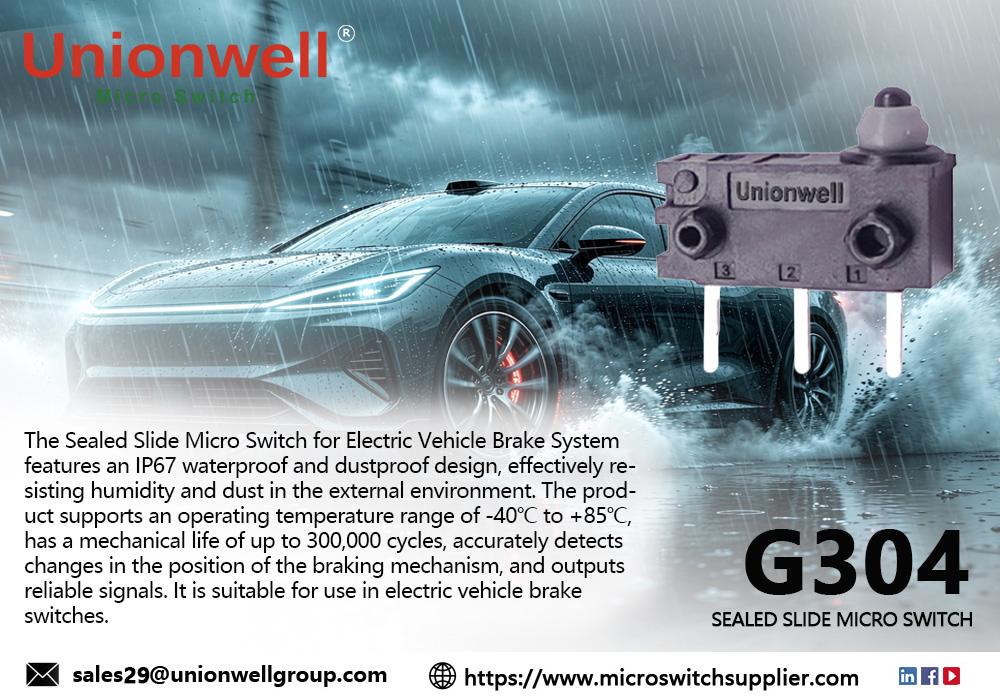
Learn how a slide micro switch detects EV brake position changes and provides reliable ON/OFF feedback to vehicle control systems.
How Does a Slide Micro Switch Detect EV Brake Position Changes?
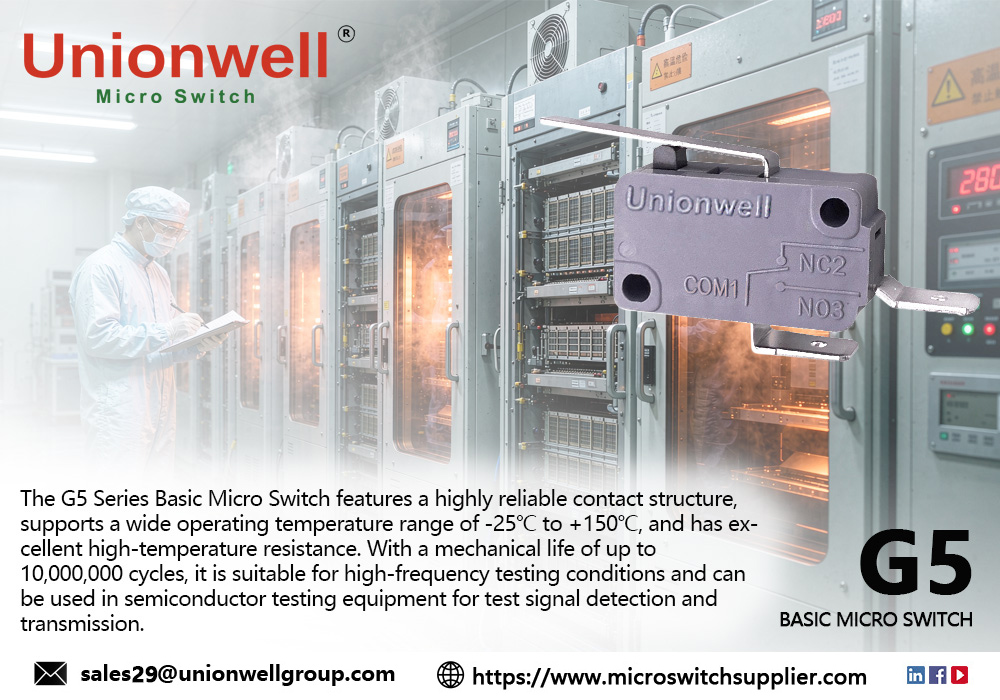
Learn how a Basic Micro Switch detects mechanical positions and provides reliable test signals for semiconductor testing equipment and automated processes.
How Does a Basic Micro Switch Work in Semiconductor Test Equipment?