Sealed Micro Switch Overview: How It Works and Why It Matters
Micro switches are a crucial type of control component, renowned for their high precision, high sensitivity, and high reliability. With the development of various technologies, sealed micro switches have rapidly emerged. Their most significant feature is their waterproof, dust-proof, oil-proof, and corrosion-resistant sealed structure, enabling them to operate stably for extended periods in harsh environments.
Therefore, sealed micro switches have become indispensable basic components in many fields, including automotive, home appliances, industrial machinery, and security equipment. The following sections will detail their structure, working principle, sealing rating, industry applications, and selection guidelines, providing professional reference for your reference.
Basic Structure and Working Principle of Sealed Micro Switches
Core Structural Components of Sealed Micro Switches
The structural design of sealed micro switches mainly consists of the following parts:
1. Housing Material
Plastic Housing: Commonly found in small, low-cost sealed micro switches, offering advantages such as excellent insulation performance and light weight.
2. Contact System (NO / NC)
Micro switches typically have two basic contact states:
Normally Open (NO): The circuit remains open when the switch is not triggered. When the actuator is triggered, the circuit closes after the action.
Normally Closed (NC): The circuit remains closed when the switch is not triggered. When the actuator is triggered, the circuit opens after the action.
Depending on application requirements, manufacturers can choose NO or NC, or select changeover contacts with SPDT (single-pole double-throw) functionality.
3. Spring Mechanism
The spring system gives the micro switch the ability to quickly switch (snap-action), enabling it to complete open or closed circuit actions in a very short time, ensuring stable output and precise control.
4. Sealing Components (Silicone Membrane, Rubber Structure, Resin Seal)
The waterproof and dustproof capabilities of a sealed micro switch mainly come from the following structure:
Silicone Membrane: Covers the button area, preventing water, oil, and dust from entering the internal contacts.
Rubber sealing rings: Used at the connection points and housing seams, enabling the switch to achieve an overall IP64-IP67 rating.
Resin encapsulation structure: Used for sealing the bottom of PCB terminals, improving humidity resistance and corrosion resistance.
This combination of sealing structures allows the switch to be safely used in high-humidity, high-dust, or high-oil environments.
Working Principle of a Sealed Micro Switch
The working principle of a sealed micro switch is similar to that of a basic micro switch, but it is enhanced in terms of environmental protection.
1. Snap-action: The micro-motion mechanism uses spring tension to instantly switch at the trigger point, achieving fast and reliable circuit switching. This design avoids contact bounce caused by unstable actuation force.
2. Actuation triggering mechanism (pressure/displacement): The switch is typically triggered in the following way: Mechanical structure pushes the driver → Pressure or displacement is sensed and triggers the internal metal plate → Internal contacts instantly complete the on/off switching.
This mechanism ensures extremely high repeatability and is suitable for long-term stable use.
3. Sealed Structure Provides Environmental Protection
Due to the design of the sealed components, the sealed micro switch prevents water droplets, vapor penetration, dust particles, oil erosion, and internal condensation from corroding the internal components. Therefore, even outdoors, in vehicle chassis, or in kitchen appliances, the sealed micro switch maintains overall cleanliness of the contacts.
The Impact of Sealing Rating on Product Design and Selection
Why is sealing rating so important? This is because in some products:
More Complex Operating Environments
The exterior of the instrument may frequently come into contact with rain, oil, dust, or other external substances;
Engineering equipment is exposed to vibration and high humidity environments for extended periods;
Kitchen appliances typically contain condensation, frost, steam, and other liquids.
Sealing Rating Affects Switch Lifespan
The sealing rating is crucial for the protection of the contacts. Contamination of the contacts can lead to:
Unstable conduction of the entire micro switch, even malfunctions or accidents;
Significant delays in switch operation, potentially affecting user safety;
A significant reduction in the lifespan of the sealed switch due to contamination, or even complete failure.
Core Advantages of Sealed Micro Switches
High Reliability and Long Lifespan
The sealed structure prevents contact oxidation and contamination in sealed micro switches, ensuring:
Stable conductivity and excellent switching performance, preventing poor contact;
Precise and consistent actuation force, ensuring sensitive triggering without false triggering or malfunction due to vibration;
A durable mechanical structure that slows down oxidation of internal springs and transient mechanisms.
Meanwhile, high-quality sealed micro switches boast a lifespan of:
Mechanical lifespan: Over 200,000 cycles,
Electrical lifespan: Approximately 200,000 cycles (depending on load).
This allows for long-term stable operation, better serving the specific device being used.
Strong Environmental Adaptability
In factory equipment, sealed micro switches offer high environmental adaptability:
Strong water resistance: Solves problems related to high humidity or condensation.
Strong dust resistance: Suitable for dusty environments found in some industrial plants.
Strong oil resistance: Suitable for machining scenarios, preventing corrosion from oil contamination from other parts of the equipment.
High/low temperature resistance (common temperature range: -40℃~+85℃): Allows the sealed switch to operate normally under certain harsh temperatures.
Ideal for High Humidity and High Pollution Environments
Typical applications include:
Automotive exterior components (e.g., door locks, anti-pinch systems)
Large kitchen appliances (dishwashers, ovens, refrigerators, etc.)
Other outdoor equipment (including charging stations, security equipment, etc.)
Some industrial machinery (including environments with oil and metal shavings)
In these products or equipment, sealed micro switches significantly improve the overall stability of the equipment.
Specific Applications of Sealed Micro Switches in Various Industries
Sealed Micro Switch Use Cases in the Automotive Industry
Door Lock Systems: Detects door lock position to prevent safety hazards caused by misjudgments.
Window Adjustment Systems: Enables anti-pinch detection and travel control.
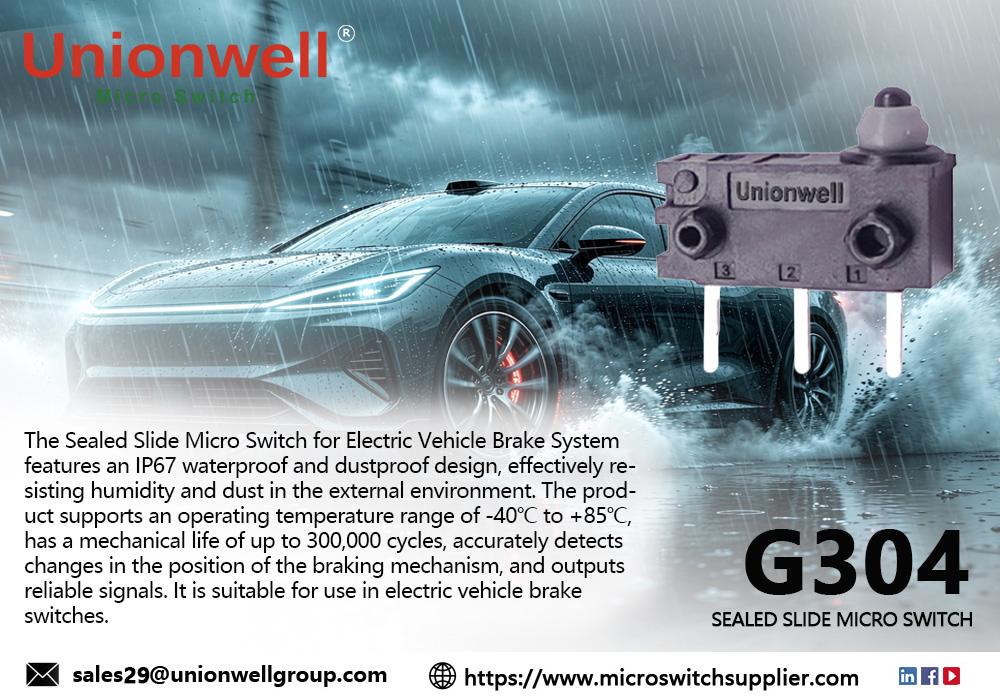
Brake and Clutch Position Detection: Ensures vehicles correctly identify braking and shifting states.
Applications in Home Appliances
Washing Machine Water Level and Door Lock Detection: Primarily detects water level to prevent leakage risks and ensure operational safety.
Air Conditioner and Humidifier Safety Protection Systems: Addresses the high humidity environment in air conditioners and humidifiers, preventing malfunctions or corrosion during use.
Refrigerator Door Detection Switch: These switches typically operate inside the refrigerator and must withstand low temperatures and condensation for extended periods.
Applications in Industrial Equipment
Mechanical Limit Detection: Prevents equipment from exceeding its travel limit.
Safety Interlock Systems: Ensures safe and reliable industrial operations.
Conveyor Equipment and Automated Machinery: Oil-resistant design is particularly important for these devices, and sealed micro switches are well-suited for this situation.
How to Choose the Right Sealed Micro Switch?
Evaluation Based on Usage Conditions
When selecting a switch, pay close attention to:
Operating temperature, ambient humidity
Presence of dust or oil
Likely to be exposed to rain or steam for extended periods.
The harsher the environment, the higher the requirements for sealing and materials, necessitating a switch with a higher protection rating.
Contact Type (NO / NC / Changeover) Selection Criteria
Select according to different needs:
NO (Normally Open): Applications requiring triggering to conduct
NC (Normally Closed): Conventional safety applications requiring signal disconnection
SPDT (Changeover): Devices requiring dual signal output
Other Parameters
Refer to the manufacturer's technical parameter table for different product series, such as operating force, lifespan, electrical ratings, insulation performance, etc. Below is a product table for reference (selected from product G306 series sealed micro switch):
|
Rating |
G306A |
30VDC 0.1A 14VDC 10mA |
|
Operating Frequency |
Electrical |
10~30cycles/min 1~100mm/s |
|
Mechanical |
15~30cycles/min. |
|
|
Initial contact resistance |
500mΩ Max. |
|
|
Insulation resistance |
100MΩ Min. |
|
|
Dielectric strength |
Between terminals |
AC 500V |
|
Between terminals and housing |
AC 500V |
|
|
Operating environment Temperature |
-40℃~+85℃ |
|
|
Lifespan |
Electrical |
14VDC 10mA 200,000 cycles 30VDC 0.1A 40,000 cycles |
|
Mechanical |
200,000cycles |
|
FAQ
Q1: How much does a hermetically sealed micro switch affect device lifespan?
A1: Hermetically sealed micro switches significantly extend device lifespan by protecting against external environmental factors, reducing wear and oxidation of internal components, especially in high humidity, high temperature, or high pollution environments.
Q2: Why are hermetically sealed micro switches so important in the automotive industry?
A2: The automotive industry faces complex external environments (such as rain, dust, and vibration). Hermetically sealed micro switches provide reliable protection, ensuring stable operation of critical control systems (such as door locks and brake detection) under harsh conditions.
Q3: Why are hermetically sealed micro switches more reliable in equipment with strong mechanical vibration?
A3: The high-quality sealing structure combined with a reinforced housing allows for long-term use in frequently vibrating automotive and mechanical equipment without being affected by vibration.
Q4: Why are hermetically sealed micro switches ideal for outdoor equipment?
A4: The waterproof and dustproof properties of hermetically sealed micro switches make them crucial for outdoor equipment, maintaining normal function even in harsh weather conditions such as rain, snow, and sandstorms.
Q5: How do hermetically sealed micro switches meet the demands of modern smart devices?
A5: As devices become increasingly complex and demanding, the high durability and reliability of hermetically sealed micro switches make them an indispensable component in smart devices, ensuring precise control and stable operation.
Conclusion
Hermetically sealed micro switches, with their superior waterproof, dustproof, and oil-resistant capabilities, significantly enhance the reliability, safety, and lifespan of devices. Whether in external detection systems in the automotive industry, the humid and hot environments of home appliances, or the polluted scenarios of industrial machinery, they provide stable and accurate control signals.
Their importance lies not only in their environmental adaptability but also in their long-term contribution to the stability of safety systems, actuators, and detection systems. For manufacturers, choosing high-quality hermetically sealed micro switches designed by micro switch manufacturers provides the most basic yet crucial safety guarantee for the overall reliability of the device.
What's the Waterproof Micro Switch: Key Features, Structure, and Applications
Ultra Miniature Micro Switch for Automotive: Compact Power in a Small Package
Related Article