How Does a Basic Micro Switch Work in Semiconductor Test Equipment?
Semiconductor test equipment is used to perform tasks such as wafer testing, chip functionality testing, package testing, and automated testing. During these processes, the equipment must not only verify the product's electrical performance but also accurately determine the position and status of components such as test heads, stages, fixtures, and automated actuators.
Basic micro switches are installed within the equipment to handle mechanical status detection and the output of test signals. By detecting positional changes in the mechanism, they convert mechanical movement into distinct switching signals, which are then transmitted to PLCs, control boards, relays, or test control systems. This article details how basic micro switches operate to minimize test interruptions caused by mechanisms failing to reach the correct position, fixtures failing to lock, or errors in process logic.
What Is a Basic Micro Switch in Semiconductor Test Equipment?
Basic micro switches utilize mechanical contacts and a snap-action mechanism; they are primarily composed of a housing, actuator, spring mechanism, contacts, and terminals. Common contact configurations include COM (Common), NO (Normally Open), and NC (Normally Closed), enabling various switching logic functions.
When an external mechanism pushes the actuator, the applied force is transferred to the internal spring mechanism. Upon reaching the specified operating position, the contacts switch rapidly, either completing or breaking the circuit. Because they feature precise actuation and reset positions, basic micro switches are ideal for fixed-position detection and equipment status verification.
The Basic Function of a Basic Micro Switch
The primary function of a basic micro switch is to output a switching signal through contact actuation. When the test mechanism has not reached the designated position, the switch remains untriggered; once the mechanism pushes the actuator to the operating position, the internal contacts switch rapidly, allowing the control system to detect the change in status.
In practical circuit applications, either NO or NC contacts can be selected based on control logic. The COM and NO terminals are typically used to output a signal upon actuation, while COM and NC are suitable for monitoring closed circuits during normal operation; various wiring configurations can also be employed to meet other equipment status monitoring requirements.
Where Is a Basic Micro Switch Used in Semiconductor Test Equipment?
Position Detection in Testing Mechanisms
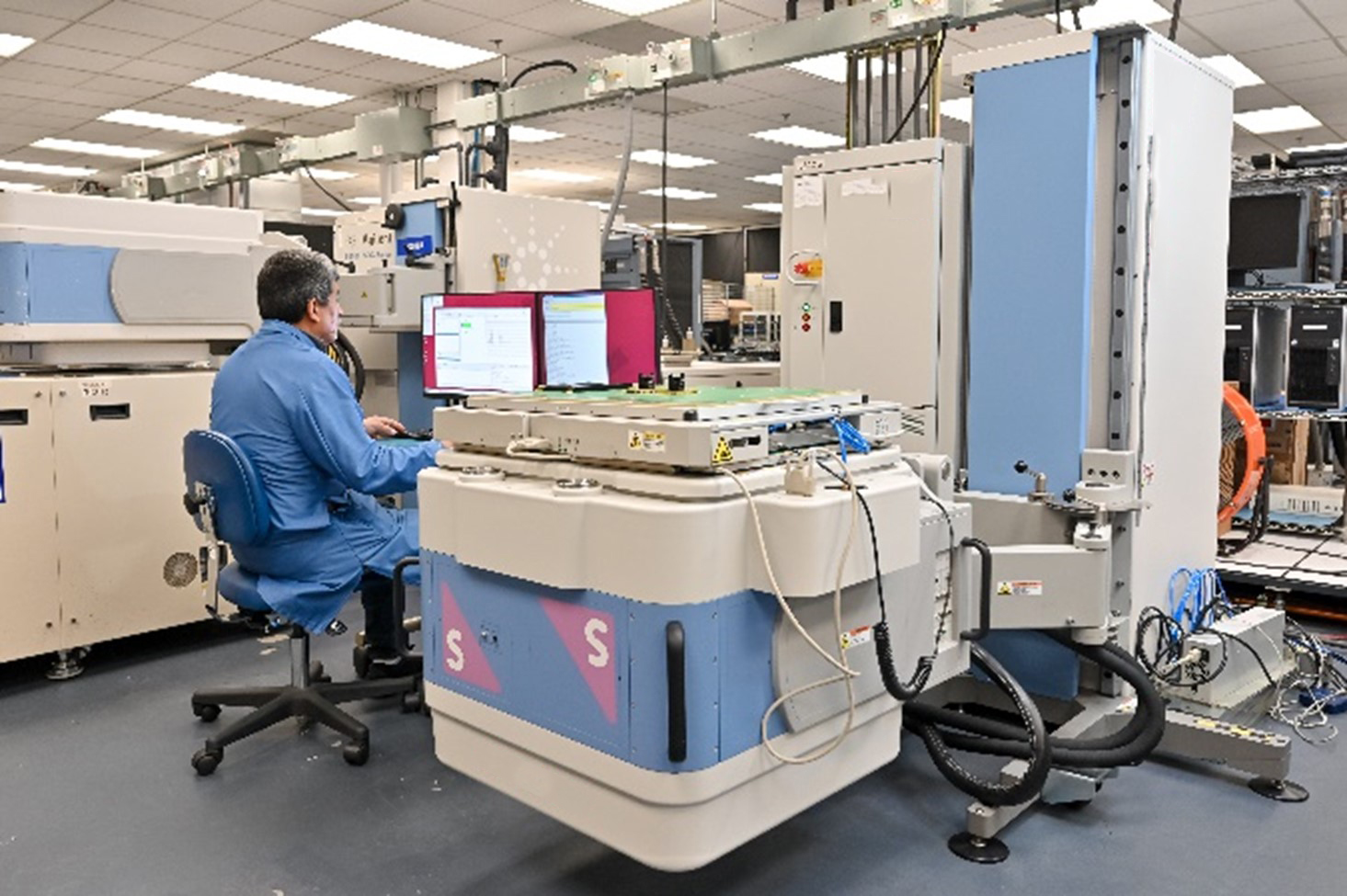
In wafer, chip, and package testing equipment, probe assemblies, test heads, stages, and guide rails must move to designated positions according to programmed sequences. Basic micro switches can be installed near upper/lower limits, home positions, or specific operating locations. When a moving component reaches the set position, a plunger or cam triggers the switch, sending a position confirmation signal to the control system.
Fixture and Clamping Status Detection
Test fixtures and clamps must maintain proper closure and secure positioning during operation. Improper chip placement, incomplete fixture closure, or improperly engaged locking mechanisms can compromise test results. Basic micro switches can be installed near fixture closing mechanisms, locking mechanisms, sliding covers, or positioning structures. When the fixture reaches the designated position, the switch outputs a status signal, allowing the control system to verify whether the necessary testing conditions are met.
End-of-Travel and Process Confirmation
Sliding stages, pneumatic cylinders, cams, and automated actuators typically have defined endpoints. Basic micro switches can be installed at the end of the mechanism's travel to confirm that the equipment has completed its required stroke. Once the slider or plunger reaches the endpoint and triggers the switch, the control system can halt the drive mechanism or proceed to the next action. However, even when functioning as a limit switch, it only provides feedback on the mechanical status; the actual test outcome is determined by the measurement system and the test program.
Why Is a Basic Micro Switch Important for Semiconductor Test Signals?
Semiconductor testing equipment must execute a series of sequential actions—such as positioning, clamping, and testing—within a limited time-frame. Unstable signals regarding position or status can lead to premature test initiation, repetitive mechanical cycling, or even equipment downtime. Basic micro switches provide direct feedback on fixed positions and specific actions; they enable the control system to verify whether mechanisms are correctly positioned without requiring complex displacement processing modules.
Fast and Consistent Signal Response
The snap action mechanism ensures rapid contact switching once the actuator reaches the operating point, resulting in a clear output state. For semiconductor testing equipment subject to continuous, repetitive operation, consistency in the operating position, reset position, and contact behavior is crucial for the stability of the testing process.
Furthermore, parameters such as operating force, pre-travel, over-travel, and differential travel must align with the equipment's mechanical design. An appropriate differential travel setting minimizes false triggering caused by minor vibrations, while adequate over-travel helps accommodate assembly tolerances.
However, over-travel must remain within specified limits to prevent subjecting the internal structure to excessive stress. In short, the mechanical range of motion must comply with the basic micro switch's specifications to minimize the risk of equipment malfunctions.
Supporting Automated Testing Processes
Automated testing workflows rely on various discrete signals, such as work-piece positioning, fixture closure, test head descent, probe contact, and mechanism retraction. Basic micro switches provide feedback at these mechanical checkpoints, allowing the control program to advance the process based on actual status rather than relying solely on fixed time delays.
For instance, a pneumatic cylinder might fail to reach its fully extended position due to mechanical resistance or work-piece misalignment, even after receiving an extension command. In this scenario, the switch remains untriggered, allowing the control system to pause subsequent actions or initiate error-handling procedures, thereby reducing the risk of operational errors or missed inspections.
How Can a Basic Micro Switch Improve Semiconductor Test Equipment Reliability?
Basic micro switches enhance equipment reliability primarily through mechanical status detection, process control, and fault prevention:
1. They assist control systems in accurately determining the positions of test heads, fixtures, and stages, thereby reducing contact anomalies or equipment collisions caused by mechanisms failing to reach their intended positions.
2. They integrate with PLC programs, relay logic, or control board inputs to establish process interlocks.
3. Selecting switches based on parameters such as contact voltage and current, mechanical lifespan, actuator type, operating force, travel distance, and mounting dimensions helps minimize maintenance issues during long-term operation.
Achieving long-term, stable operation in semiconductor test equipment requires a comprehensive evaluation of switch performance, mechanical installation precision, circuit design, and control programming.
Conclusion
By detecting mechanical movements and positional changes, basic micro switches convert the status of mechanisms into clear electrical signals, providing reliable process feedback for semiconductor test equipment. They are suitable for applications such as probe mechanisms, test stages, chip fixtures, package positioning mechanisms, automated loading/unloading systems, and end-of-travel limit structures, serving to verify that mechanisms are in place, fixtures are closed, and testing steps are complete.
The stable contact switching of basic micro switches enables PLCs, control boards, and test systems to accurately identify equipment status, supports automated testing workflows, and lowers the risk of test interruptions caused by errors in mechanical status detection. When selecting products from micro switch suppliers, it is essential to comprehensively consider contact parameters, mechanical lifespan, operating consistency, actuator type, travel range, mounting dimensions, and the operating environment to ensure full compatibility with the test equipment's mechanical structure and control logic.
How Does a Slide Micro Switch Detect EV Brake Position Changes?
How Does a Basic Micro Switch Work in an Electric Screwdriver?
Related Article