How Automotive Micro Switch Supports Safety Restraint Systems
Modern automotive safety restraint systems encompass not only seat belts and airbags, but also seat belt buckles, seat position, occupant status, and related status detection modules. As automotive electronic control becomes increasingly sophisticated, systems require more accurate acquisition of the actual state of mechanical components.
An automotive micro switch can detect changes in the position of seat belts, buckles, seats, or related mechanisms, converting mechanical actions into electrical signals and providing status input to the vehicle control system. This article will introduce the specific role and importance of the automotive micro switch in seat belt systems and airbag auxiliary detection, helping readers better understand this electronic component.
Why Automotive Micro Switch Is Important in Safety Restraint Systems
Safety Restraint Systems are a crucial component of automotive safety control, comprising a Seat Belt Assembly, Seat Belt Buckle, Airbag Module, and Detection Components. The Seat Belt Assembly is responsible for seat belt restraint, the Seat Belt Buckle handles insertion and release, the Airbag Module is part of the passive safety system, and the Detection Components are responsible for acquiring mechanical status.
The automotive micro switch is primarily used to detect seat belt locking, buckle position, and related mechanism movements. It outputs switch signals via contacts, providing status feedback to the vehicle control system. Its basic signal chain is: Mechanical Movement → Micro Switch Actuation → Contact Switching → Electrical Signal → Control System Input.
In this way, mechanical position is translated into a definite electrical input, helping the control module determine the current state. Stable trigger position, consistent action, and contact reliability reduce false status judgments. However, the automotive micro switch mainly performs detection and signal feedback functions; it does not directly determine whether the airbag deploys. This is typically determined by a dedicated safety module based on a comprehensive assessment of multiple inputs.
How Automotive Micro Switch Works in Safety Restraint Applications
Components such as seat belt buckles and seat adjustment mechanisms generate mechanical displacement during operation. When a component reaches a designated position, it actuates the actuator of an automotive micro switch, causing internal contacts to switch and output a status signal. The process is: mechanical movement → actuator triggered → contact switching → signal output → control system reading (for example, in a seat belt buckle, inserting the seat belt causes internal mechanism movement, generating clear feedback through the corresponding micro switch).
Compared to complex detection schemes, this mechanical detection method features a clear trigger position, fast response, simple structure, and direct signal. For automotive component designers, the micro switch is a crucial interface connecting mechanical structures and electronic control systems.
Automotive Micro Switch for Seat Belt Status Detection
In safety restraint systems, seat belt status detection is one application of automotive micro switches. The seat belt reminder switch primarily detects the mechanical status of the seat belt buckle.
Once the seat belt is inserted and locked, the internal mechanism of the buckle shifts, pushing the micro switch actuator to switch contacts and output a corresponding signal. The control system uses this signal to determine whether the Seat Belt Buckle is locked, whether the seat belt is fully inserted, and whether the buckle status has changed, providing status input to the Seat Belt Reminder System.
However, the micro switch primarily performs detection and signal feedback functions and does not directly determine whether a reminder is triggered. The actual reminder strategy is usually determined by the vehicle control system based on a comprehensive assessment of occupant status, seat belt status, and other information.
Automotive Micro Switch in Airbag Auxiliary Detection Systems
Automotive micro switches can also be used in some auxiliary detection structures related to airbag systems. However, airbag systems are complex safety control systems. Whether an airbag deploys is determined by the safety control module combining multiple signals, including collision sensors, vehicle status, and seat information. The micro switch plays only an auxiliary role.
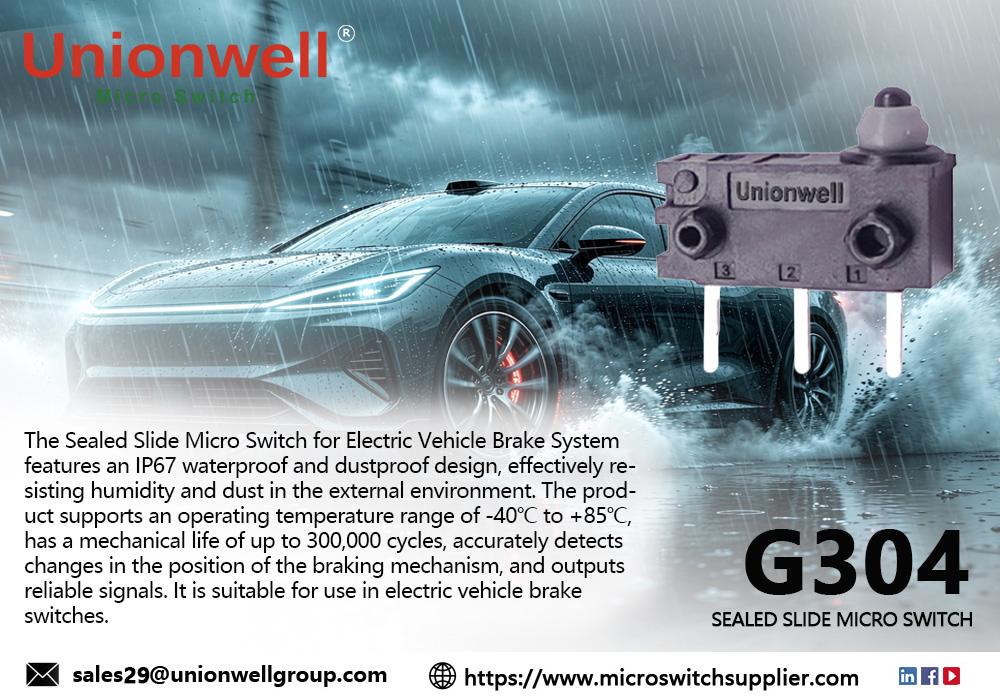
Furthermore, for installation locations affected by moisture, dust, or other environmental factors, waterproof micro switches can be used to enhance their environmental adaptability. However, in safety-related applications, the specific model and detection scheme still need to be verified in conjunction with the vehicle platform, installation location, functional safety requirements, and system architecture.
Key Performance Requirements for Automotive Micro Switch
Switching Reliability and Mechanical Life
Components such as seat belt buckles undergo numerous insertion, release, and repetitive operations; therefore, automotive micro switches require stable operational performance:
- The actuator's operating force should match the mechanical structure to avoid excessive force increasing the mechanism's load, or insufficient force leading to unstable triggering;
- The micro switch needs to complete state switching at a clearly defined mechanical position to ensure the control system accurately judges the actual state;
- Internal contacts should maintain reliable continuity and disconnection after long-term use, reducing contact anomalies and signal jitter.
- Mechanical life is also an important indicator; manufacturers must ensure consistent performance in terms of materials, springs, contact structure, and manufacturing processes.
In addition to the above performance requirements, automakers also need to pay attention to differences in operating force, stroke, and triggering position between batches of products, etc.
Compact Automotive Micro Switch Design
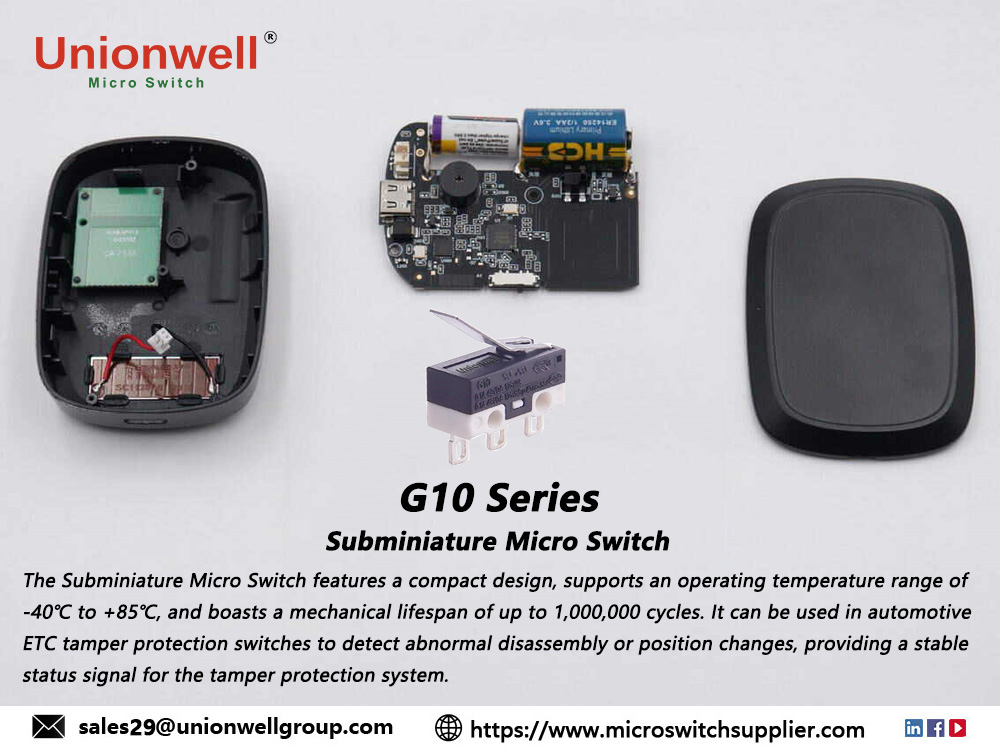
Automotive seats, seat belt buckles, and interior structures typically have limited space; therefore, automotive micro switches require appropriate dimensions and installation adaptability. Miniaturization reduces installation space requirements, making the switch easier to apply in compact mechanisms.
However, manufacturers still need to balance structural strength, contact performance, stroke, and mechanical life. Therefore, automotive component manufacturers should comprehensively consider switch size, mounting method, terminal structure, actuator type, and stroke when selecting a switch to ensure a reliable match with the actual automotive mechanism.
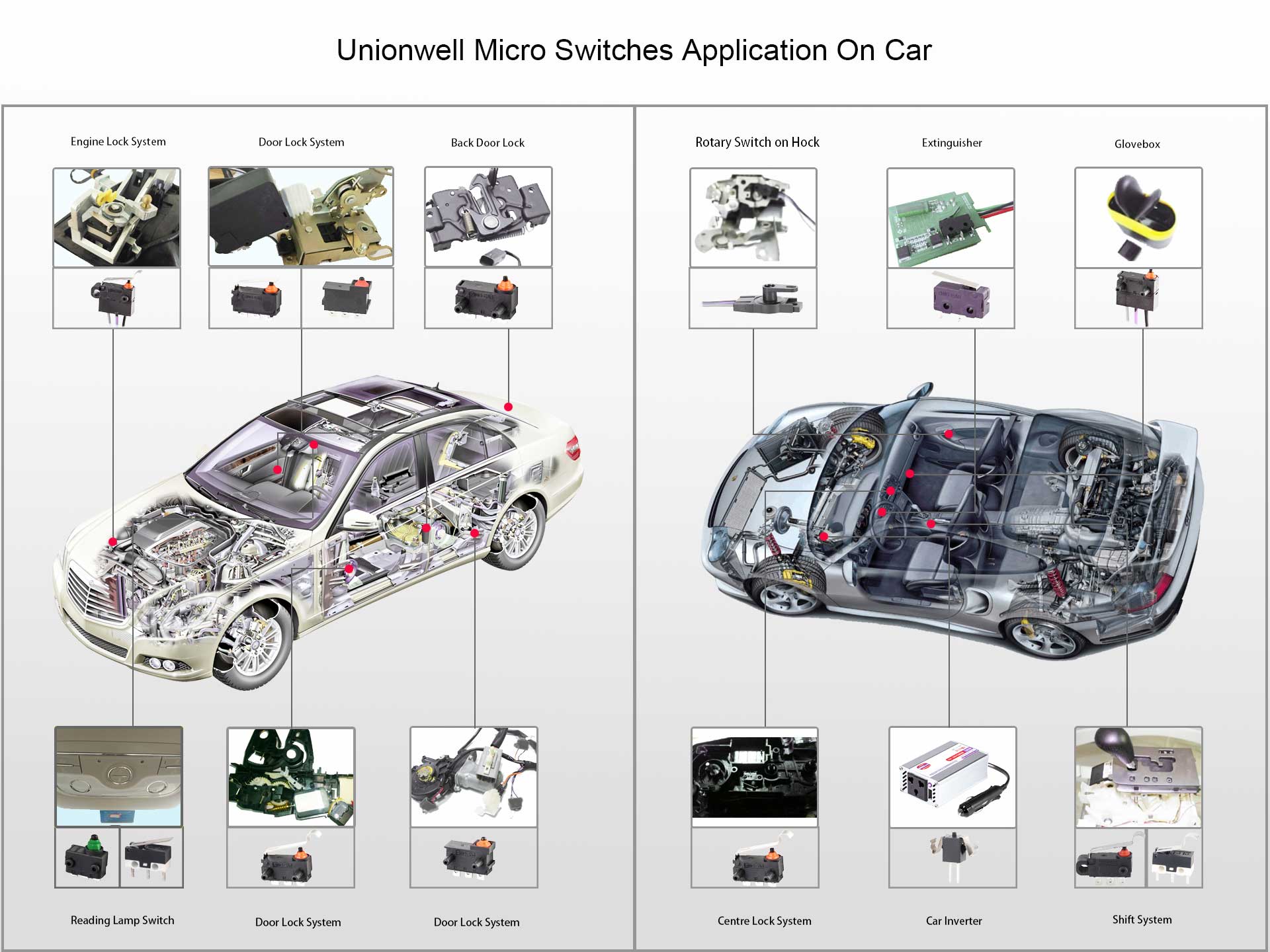
Environmental Adaptability of Automotive Micro Switch
The automotive application environment is complex. Automotive micro switches may be affected by temperature changes, vibration, moisture, dust, and long-term mechanical shock. Therefore, appropriate structure, materials, and environmental ratings need to be selected based on the installation location.
For locations with moisture or environmental exposure risks, sealed micro switches can be used to reduce the entry of external factors into the interior, minimizing the impact on contacts and mechanical structure. However, protective capability is not the only indicator; operating temperature, mechanical life, terminal structure, contact materials, actuation force, and installation method must also be considered. Simultaneously, the actuator stroke must be matched with the mechanical mechanism to ensure long-term stable triggering.
Conclusion
Automotive micro switches in safety restraint systems primarily perform mechanical status detection, position confirmation, and signal feedback functions. In seat belt systems, seat belt reminder switches confirm the seat belt buckle status and provide input signals to the control system; in airbag assist systems, waterproof micro switches are used for position detection and status feedback of some related mechanical mechanisms.
As automotive electronics become increasingly sophisticated, automotive micro switches need continuous improvement in miniaturization, trigger consistency, mechanical life, contact reliability, and environmental adaptability. For micro switch manufacturers, robust R&D, precision manufacturing, and quality control capabilities are crucial for providing stable detection components for automotive safety-related auxiliary systems.
Why Does a Push Rod Motor Need a Miniature Micro Switch for Limit Control?
Why Sealed Mini Micro Switch Is Used in Modern Ice Makers
Related Article