What is a Shift Lever Micro Switch? Definition & Common Issues
Shift lever micro switches play an important role in daily driving, it is small but has the characteristics of fast response and sensitive operation, which is an essential guarantee of vehicle safety driving. In this article, we will discuss what a shift lever micro switch is, as well as its features and common issues.
What is a shift lever micro switch?
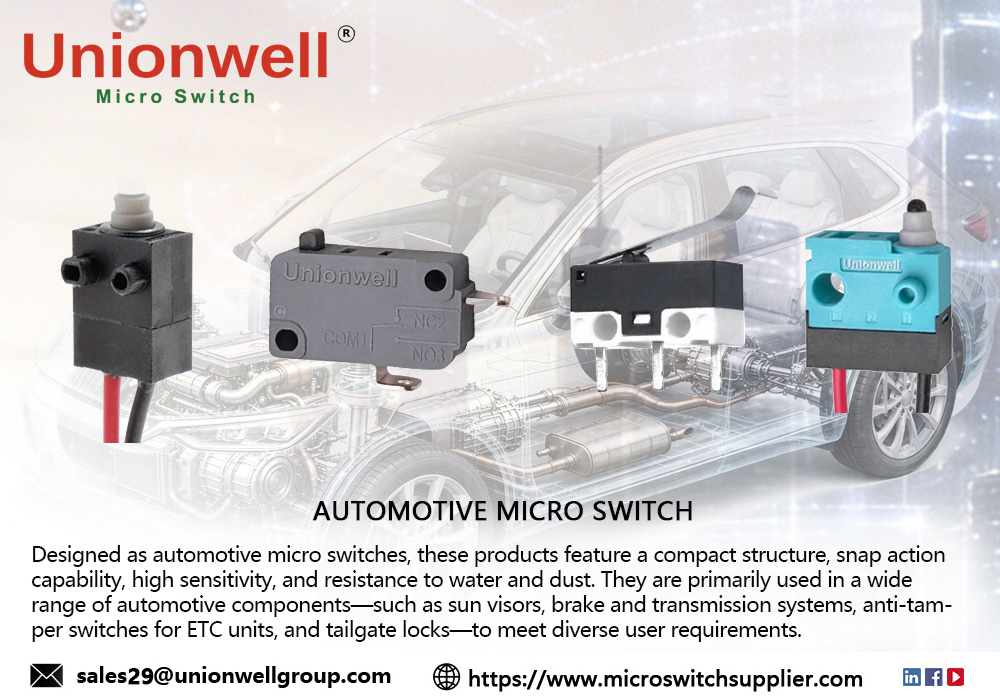
Shift lever micro switches are snap action micro switches used to detect the position of the shift lever and send electrical signals to the vehicle control system. These signals can trigger different functions, such as starting or shutting down the engine, activating the reverse camera, or unlocking the shift lever. Commonly used in brake-transmission shift interlocks and electric vehicle shifter.
Features
Compact and small size: The micro switch is small, only 27.8mm*10.3mm*15.9mm, the sub-miniature micro switch is even the size of a fingernail cap, making the micro switch well suited for installation in a compact space structure such as a shift lever.
Sensitivity: The shift lever micro switch can withstand a wide range of operating forces from 7gf to 600gf. In addition, its snap action construction allows it to respond immediately to very small physical pressure changes.
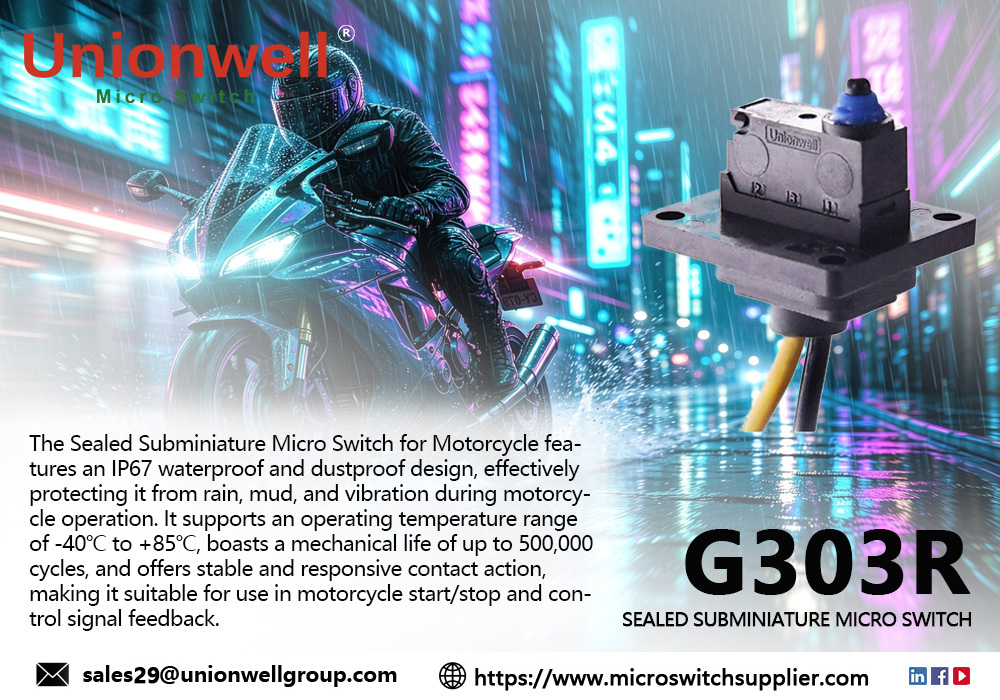
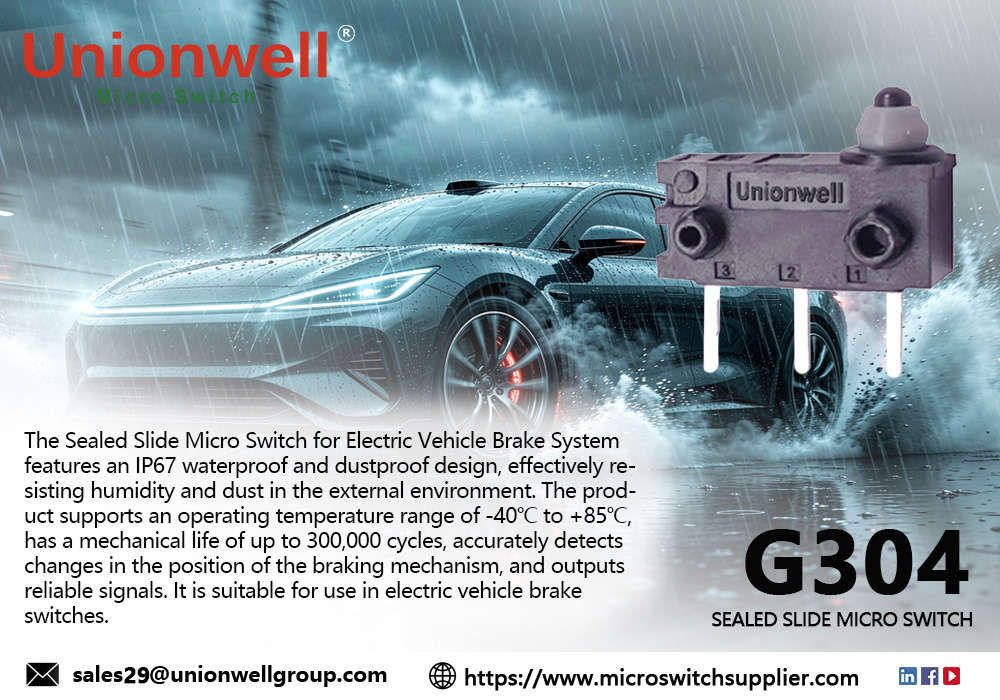
Water and Dust Proof: Some of the shift lever micro switches are sealed micro switches with IP67 rated for water and dust proof. This rating guarantees excellent resistance to water, dust, and contaminants, ensuring long-term reliability even in challenging conditions.
Long life: The mechanical life of Shift lever micro switch is 500,000 to 1,000,000 cycles, and the Electrical life is from 10,000 to 50,000 cycles. This longevity makes them a cost-effective and low-maintenance solution for automotive manufacturers and engineers.
Construction
What is a shift lever?
A shift lever, also known as a shifter or gear lever, is a control device in an automobile that allows the driver to shift gears manually or automatically. In automatic transmission cars, there are usually modes such as Park (P), Reverse (R), Neutral (N), and Drive (D). In manual transmissions, it helps select different gear levels directly.
More than just a mechanical component, the shift lever works closely with sensors and micro switches, to ensure that the vehicle's transmission system responds correctly to the driver's inputs.
Traditional Shift Lever VS E-Shifter: How Does the Micro Switch Work in the Shift Lever?
Traditional Shift Lever
Use a mechanical linkage, such as a hydrodynamic torque converter in conjunction with a traditional mechanical gearbox to realize the shifting function. In traditional mechanical shift levers, the micro switch is used primarily for position detection and interlock safety functions.
Physical Activation: When the driver moves the shift lever into a specific gear, such as Reverse or Park, the lever mechanically presses against the micro switch.
Circuit Control: This contact closes or opens a circuit, sending a signal to the car’s electronic system.
Triggered Actions: Unlocks or locks the gear shift mechanism.Enables or disables the engine start. Activates backup camera when in Reverse.
E-Shifter
There are no gears in an e-shifter, it only serves as a signal to output control commands.The switch inside the gearbox plays the role of signal output, and different gears will press different micro switches to output the corresponding signals.
Signal to ECU: The switch sends a digital signal to the vehicle’s ECU (Electronic Control Unit) to process the shift command. Each gear position (P, R, N, D) corresponds to a specific micro switch or a combination of switches.
Brake-Shift Interlock: The vehicle may require the driver to press the brake pedal before shifting out of Park. The micro switch in the shifter communicates with the brake switch to enable gear changes.
Gear Position Verification: Multiple micro switches may work together to confirm the shifter’s position and prevent errors. For example, preventing accidental shifts into Reverse while moving forward.

Other Application of Shift Lever Micro Switch
Although shift lever micro switches are mainly used in the automotive industry, they can also be used in other industries, such as:
Heavy machinery: To monitor gear changes and prevent accidental shifts.
Motorized wheelchairs: Ensure proper operation when switching modes.
Industrial automation: Using levers to control mechanical systems and requiring position feedback.
Common Issues of Shift Lever
Wear and tear: Due to frequent use, the internal spring or contact may degrade.
Dust or debris: Contamination can cause the switch to stick or fail.
Misalignment: Improper installation or mechanical impact can affect switch accuracy.
Electrical failure: Faulty wiring or short circuits can interrupt signal transmission.
Conclusion
Shifter micro switches are useful in both conventional and electronic shifters due to their compactness, long life and sensitivity. It assists the driver in shifting gears smoothly and provides safety. While selecting a shifter microswitch, it is important to focus on basic parameters such as its electrical, current voltage and life span, consider its compatibility and most importantly, choose a reliable supplier.
Unionwell is a experienced micro switch manufacturer, We have 20 years of experience in manufacturing shifter micro switches with ISO certification and UL, cUL, ENEC etc. 90% of Unionwell's production and testing takes automated equipment to ensure product quality and consistency. Coutacs us now for your free samples and product catalog!
6 Types Lever of Micro Switches and How to Change the Micro Switch Lever
How Miniature Micro Switches Improve Smart Home Appliance Functionality
Related Article