Common problems and solutions for rice cooker micro switches
The rice cooker is an indispensable household appliance in modern homes, and its working principle relies on the intelligent detection of micro switches to control the opening or closing of heating heating elements during cooking. However, the micro switch is prone to various small faults after a long period of use, how should we detect and solve it?
What is a rice cooker micro switch
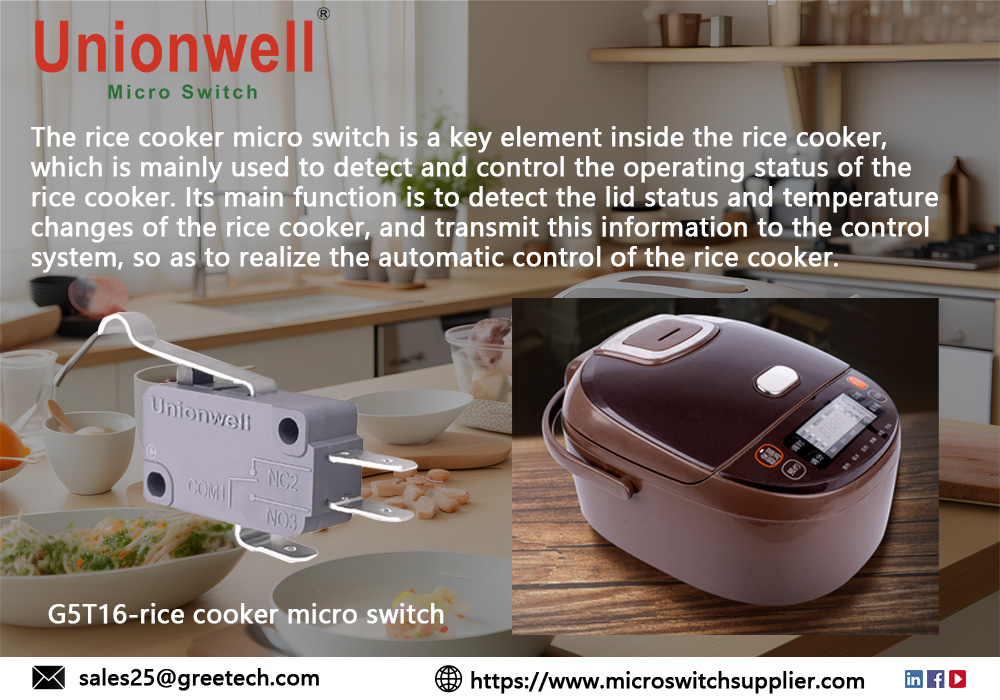
A rice cooker microswitch is a small and sophisticated electronic switch that is usually installed inside a rice cooker. Its main function is to control the switching on and off of the circuit by sensing the temperature change inside the rice cooker. With the activation of the switch, the bottom of the rice cooker starts to heat, and when the temperature inside the rice cooker reaches a preset value, the micro switch will automatically disconnect the circuit, thus stopping the heating and avoiding overheating.
When the rice cooker is kept warm, the micro switch can continuously detect the temperature inside the pot to keep the temperature in the pot at a suitable temperature.Rice cooker micro switches play a vital role in the safe and proper operation of rice cookers.
Working knowledge of rice cookers
The rice cooker heats the water and rice inside the pot through a heating plate, and when the water boils and evaporates, the temperature inside the pot rises rapidly. The thermistor senses this temperature change and triggers a micro switch to cut off the power supply and stop heating. The function of the micro switch is to control the on/off of the circuit, ensuring that the rice cooker automatically stops heating after the rice is cooked, preventing overheating and scorching rice.
How does a rice cooker know when to stop
This mainly relies on the built-in thermistor. When the water in the pot has evaporated and the temperature rises rapidly, the thermistor senses this change and triggers the micro switch in the rice cooker, and the rice cooker knows that it should stop heating, so it disconnects the power supply and stops heating. This ensures that the rice is cooked and not overcooked.
Do rice cookers turn off automatically?
Most modern rice cookers have an automatic power-off feature. When the rice is cooked, the micro switch inside the rice cooker will automatically disconnect the power and stop heating. This is to avoid the rice from burning. When the thermistor detects that the temperature inside the pot has risen to a preset value, the micro switch will cooperate with the thermostat to cut off the circuit, thus stopping the heating.
Common problems and solutions to rice cookers
- Power problem: Check whether the power plug of the rice cooker is properly plugged into the socket and whether the socket has electricity. If you have a spare outlet, you can try a different one.
- Damaged indicator light: If the rice cooker is heating normally but the light is not on, it may just be that the indicator light is damaged. You can continue to use the rice cooker at this point, but it is recommended to repair or replace the indicator light as soon as possible.
- Internal fuse is blown out: Some rice cookers have fuse protection circuits inside. If the fuse is blown out, the rice cooker will not be able to power on. The bottom of the rice cooker can be opened, the fuse can be checked and replaced.
- Internal circuit failure: If there is no problem with the power supply and fuse, it may be that the internal circuit board of the rice cooker or the micro switch of the rice cooker is faulty. In this case, it is necessary to contact a professional maintenance personnel for inspection and repair.

Rice cooker not turning on
- Check the power supply: First, check whether the power plug of the rice cooker is plugged in properly and whether it is loose or blocked by food particles.
- Micro switch failure: Damaged or stuck micro switch will cause the rice cooker to fail to start properly. The rice cooker micro switch is a key component that controls the on/off of the circuit. If the microswitch is damaged or stuck, you can try tapping the rice cooker gently to see if it is able to get back to normal. Or you can try to disassemble the rice cooker and check if the micro switch is working. If there is a problem with the micro switch, it needs to be replaced.
- Internal circuit problems: If there is no problem with the micro switch, it is necessary to consider that it may be a fault of the circuit board or other components, which needs to be repaired by professionals.
Rice cooker not heating
- Heating plate failure: Use a multimeter to test the resistance value of the heating plate and check whether it is working normally. If the heating plate is damaged, it needs to be replaced.
- Faulty micro switch: If the micro switch of the rice cooker is damaged or stuck, it will cause the rice cooker to fail to heat. You can try gently tapping the rice cooker, or disassembling the rice cooker shell, to check for visible damage or jamming of the microswitch.
- Internal circuit board failure: The components on the internal circuit board may be aging, burned, or poorly contacted. This situation is difficult to handle on its own and requires professional maintenance personnel to overhaul and repair.
- Temperature sensor failure: The temperature sensor is responsible for detecting the temperature change inside the pot, if the sensor is faulty, the rice cooker may not be able to heat properly. The temperature sensor needs to be inspected and replaced.

If you lack relevant knowledge or cannot detect the fault yourself, it is recommended to contact a professional maintenance personnel for maintenance.
What to do if the micro switch of the rice cooker fails
Analyze the causes
There can be many reasons why a rice cooker micro switch may malfunction, such as excessive use, frequent operation, external shocks, etc. Knowing the cause of the failure can help you take the right fixative action.
Check for damage
To check if the micro switch is damaged, you can first disassemble the rice cooker shell and find the position of the micro switch. Check the switch for obvious signs of damage, such as burning, breaking, etc. If the appearance is normal, you can use a multimeter to test its on-off.
Replace the switch
If it is determined that the rice cooker microswitch is damaged, it needs to be replaced. You can buy a micro switch of the same model, follow the steps of the rice cooker to remove the damaged switch, and install a new micro switch.
Detect the switch
Once the microswitch is replaced, it needs to be tested to ensure that it is working properly. You can reassemble the rice cooker, turn on the power for testing, and observe whether the rice cooker can start and stop working normally. If the problem is solved, the micro switch has been replaced successfully.
If you don't know much about repairing rice cookers, it's best to look for a professional repair shop or manufacturer for help. If you would like more information or models about rice cooker micro switches, please contact Unionwell micro switch products or contact us for more information on high quality micro switches.
Dishwasher pressure switch applications and knowledge
Learn about Latching micro switch
Related Article