Ensuring safety and functionality: the role of micro switches in microwave oven doors
A microswitch, also known as a snap-action switch, is an electrical switch that is triggered by a tiny physical force. Due to their high sensitivity and reliability, micro switches are widely used in a wide range of devices, from household appliances to industrial machinery to automotive systems, micro switches are used in every aspect of our lives. Microswitches play a particularly critical role in microwave ovens, not only ensuring the proper operation of microwave ovens, but also providing important safety guarantees for users.
The basic principle of a micro switch
How micro switches work
Microswitches are designed to trigger the on/off of a circuit by applying very little force. The interior usually consists of a small metal spring and a pair of contacts. When an external force, such as pressing or releasing is applied to the lever, the spring compresses or releases, causing the contact position to change and the circuit to be turned on or off.
Internal structure
The internal structure of the micro switch is very compact, mainly including:
Joystick: Generally made of metal or plastic material, when an external force acts on it, the joystick moves with it.
Spring: A spring that is loaded on a joystick that compresses or releases when the joystick moves, bringing it back into place.
Contacts: A pair of electrical contacts that enable the circuit to be switched on and off by the action of a joystick and a spring.
Microswitches are able to operate with minimal physical force, making them ideal for use in household appliances where precise and fast response is required. For example, in a microwave oven, the microswitch needs to be triggered when the door is only slightly closed, which ensures that the microwave oven can only operate when the door is completely closed, ensuring safety during use.

Specific applications of micro switches in microwave ovens
Installation location and function
In microwave ovens, micro switches are usually installed on the edge of the furnace door. When the furnace door is closed, the switch is depressed, the contacts are turned on, the circuit is closed, and the microwave oven starts to heat up. When the furnace door is not completely closed or is opened, the switch pops up, the contacts are disconnected, the circuit is disconnected, and the microwave oven stops working immediately. It effectively protects the normal operation of the microwave oven.
Prevent microwave leakage
Microwave ovens produce microwaves that are harmful to humans when they are running, so when starting the microwave oven, you need to make sure that the furnace door is completely closed. This requires the high sensitivity and fast response ability of the micro switch to detect and ensure that the furnace door remains closed during operation, preventing microwave leakage, so as to ensure the safety of users.

Types of micro switches and their multiple protection functions in microwave ovens
Common types of micro switches and their characteristics
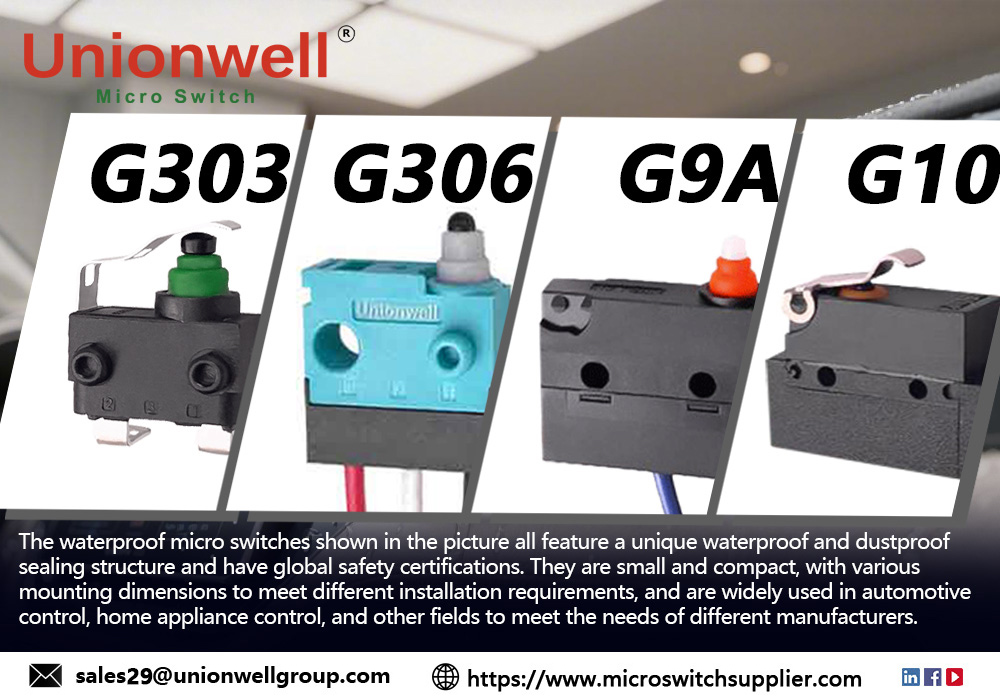
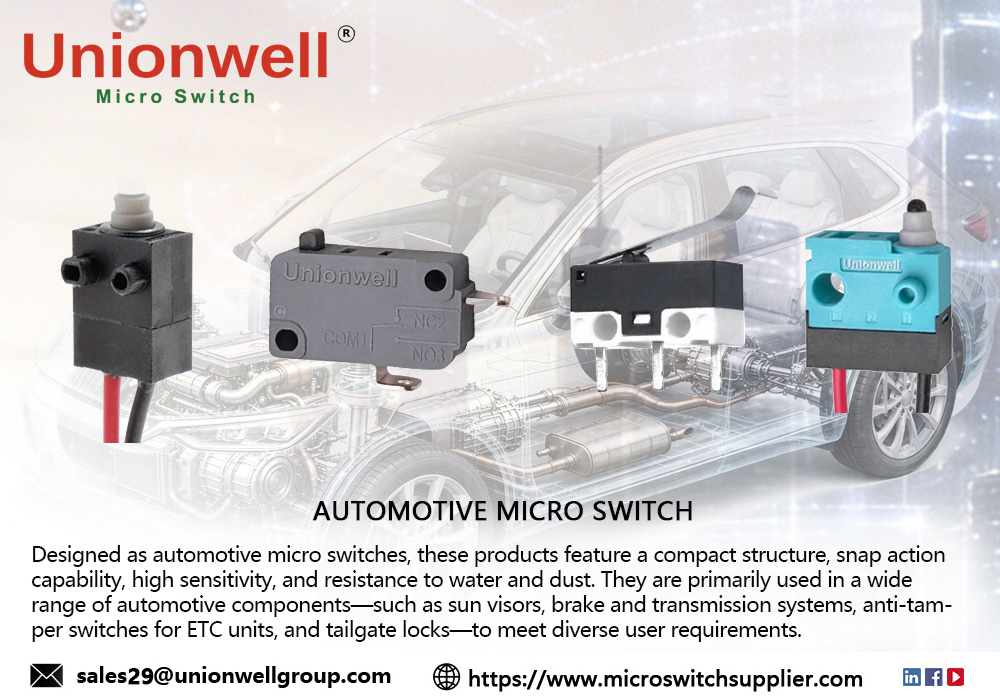
There are many types of micro switches, each with its own unique features and range of applications. For example, some micro switches are waterproof, while others are designed for use in high-temperature or high-pressure environments. Common types of micro switches are basic micro switches, waterproof micro switches, and high temperature switches. For example, the G5-Series basic micro switch independently developed and produced by our company is widely used in microwave ovens of major brands.
Multiple protections
In microwave ovens, multiple microswitches are often installed to provide double or triple protection. These switches are usually installed in different locations, and when the furnace door is closed, they work together to ensure multiple disconnections and closures of the circuit. This multi-protection mechanism ensures that the microwave oven reliably detects the door status in any situation and, if necessary, stops working immediately.
Work collaboratively
The coordinated work of multiple micro switches increases the safety and reliability of the system. Even if one microswitch fails, the other switches can still provide the necessary protection to ensure the proper operation of the microwave oven and the safety of the user.
Common faults and maintenance of micro switches
After a long period of use, the micro switch may have some malfunction problems. For example, the switch may wear out due to frequent use, resulting in poor contact and switch failure; Or the spring inside the switch may lose its elasticity and not work properly, etc. These faults may cause the microwave oven to not function properly.
Troubleshooting methods
Poor contact
Symptom: The device sometimes fails to boot or operates erratically.
Exclusion Method:
- Check switch connections: Make sure all connectors are securely connected and not loose or corroded.
- Clean the contacts: If the contacts are dusty or oxidized, they can be cleaned with a contact cleaner.
- Replace the contacts: If the contacts are severely worn, consider replacing the entire switch.
Mechanical stuck
Symptom: The switch cannot be opened and closed normally, and it cannot be reset after being pressed.
Exclusion Method:
- Check the mechanical part: open the switch housing and check whether the internal mechanical parts are stuck.
- Lubrication of mechanical parts: Lubricate the stuck parts with appropriate lubricating oil, but avoid the lubricating oil coming into contact with the electrical parts.
- Replace the switch: If the mechanical part is badly damaged, it is recommended to replace the micro switch with a new one.
The switch is damaged
Symptom: The switch fails completely, and the device fails to start.
Exclusion Method:
- Test Switch: Use a multimeter to test the on-off state of the switch. Connect the switch to the circuit, press the switch, and observe the change in the reading of the multimeter.
- Replace the switch: If the test result shows that the switch is damaged, you need to replace the new switch according to the maintenance manual of the equipment.
Environmental impact
Symptoms: Degraded or failed switch performance, especially when used in a humid or dusty environment.
Exclusion Method:
- Check environmental conditions: Ensure that the switch operating environment meets its design specifications. If the switch is not waterproof and dustproof, avoid using it in harsh environments.
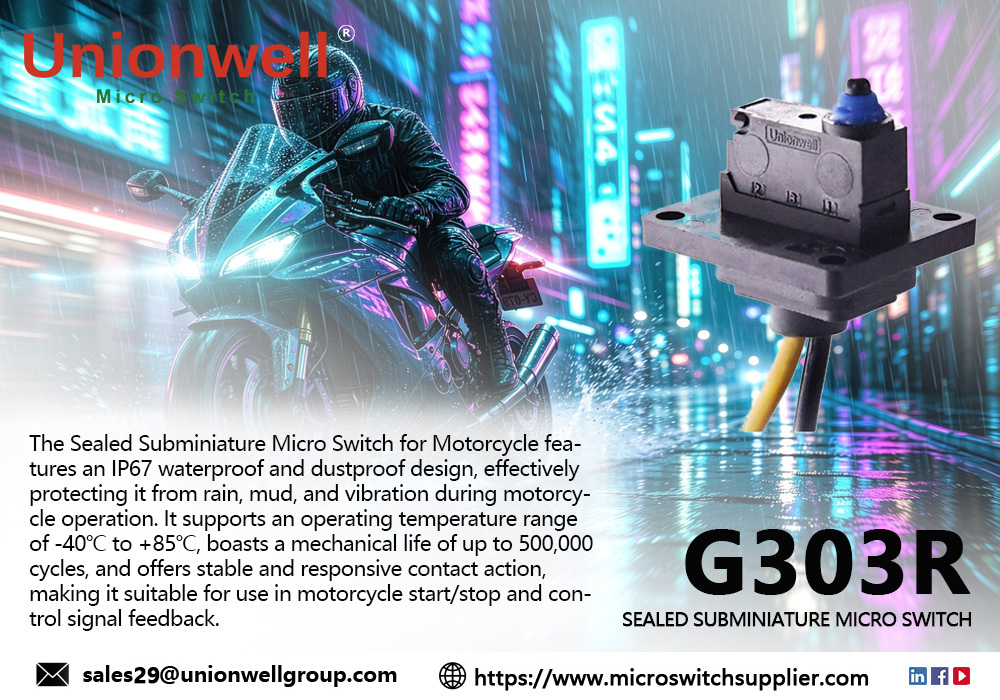
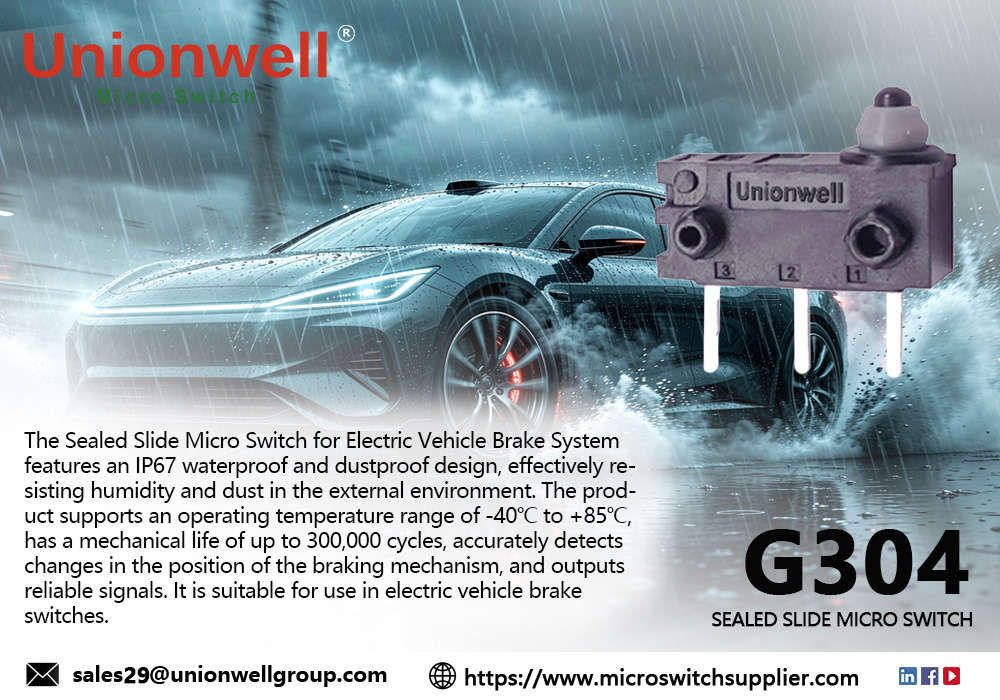
- Choose the right switch: If the environmental conditions are harsh, it is recommended to use a micro switch with a higher degree of protection, such as an IP67 rated waterproof and dustproof micro switch.
Aging of switches
Symptoms: After long-term use, the spring loses its elasticity, the sensitivity of the switch decreases, and the operation feel deteriorates.
Exclusion Method:
- Regular maintenance: Regularly inspect and maintain the micro switch to remove dust and impurities and keep the switch in normal working condition.
- Replace the switch: If the switch is severely aged and cannot restore its performance through maintenance, it is recommended to replace the micro switch with a new one.
The importance of choosing a high-quality micro switch
High-quality micro switches have higher reliability and stability, and can accurately detect and control the operating status of equipment at critical moments. High-quality micro switches usually have a higher degree of protection, such as IP67 water and dust resistance, and can operate in harsh environments. This is especially important for equipment used in wet, dusty or corrosive environments to ensure stable operation and long life of the equipment. The use of high-quality micro switches can significantly reduce the failure rate of the equipment. Poor quality switches can cause frequent failures due to material or workmanship issues, affecting the proper operation of the equipment.
How to choose a high-quality micro switch
Understand the application environment
First of all, it is necessary to clarify the application environment of the micro switch. Different application scenarios may have different requirements for micro switches. For example:
Household appliances: Switches with high durability and sensitivity are required to adapt to daily high-frequency use.
Industrial equipment: Switches with excellent dustproof and waterproof performance are needed to withstand harsh environments.
Check the level of protection
High-quality micro switches should have a high degree of protection to adapt to a wide range of environmental conditions. The protection level is usually indicated by the IP (Ingress Protection) code, such as IP67, which means that it has excellent dustproof and waterproof performance, and is suitable for use in humid and dusty environments.
Consider the switch type
There are various types of micro switches, such as SPDT (Single Pole Double Throw), SPST (Single Pole Single Throw), etc. Select the appropriate switch type according to the application requirements to ensure that the function is realized.
Check certifications and standards
High-quality micro switches usually have passed a number of international certifications and standards, such as RoHS, REACH, etc. These certifications not only prove the environmental protection and safety of the products, but also enhance the market competitiveness and user trust of the products.
Product recommendations

Max. Current:26A
Max. Voltage:125/250VAC,48VDC
Operating Temperature:-40℃~+150℃
Protection Level:IP40
Electrical life:20,000~100,000cycles
Mechanical life:1,000,000cycles
Function:SPDT
Operating force:7gf ~600gf
Insulation Resistance:100M Ohm At500v DC
Vibration resistance:10~55Hz
Application:Home Appliance
Rating:26A
Color:Black,White
Product Name:Micro Swich
The Unionwell G5 series micro switches are a good choice. It has excellent water and dust resistance, high sensitivity, and high durability, making it ideal for use in household appliances such as microwave ovens.
Conclusion
The role of micro switches in microwave ovens cannot be ignored. It not only ensures the proper operation of the microwave oven, but also provides an important safety guarantee for the user. By understanding how microswitches work, their specific applications, and how to choose them, we can better maintain and use microwave ovens to ensure their safe and reliable operation over the long term. Choose high-quality micro switches, Unionwell G5 series micro switches, can provide better protection for the use of microwave ovens, meet all your use needs.
Micro switch in the refrigerator: Enables intelligent control of the interior lights
Learn about micro switches on commercial vehicles
Related Article