Magnetic Keyboard Switch Trends in Gaming Keyboard Design
With the continued growth of the esports industry and the high-performance PC gaming market, gaming keyboards are gradually evolving into a crucial peripheral that significantly impacts the gaming experience. Especially with the rapid development of FPS, MOBA, and competitive games, players are demanding higher levels of key response speed, actuation distance, input precision, and personalized adjustment capabilities.
In this trend, magnetic keyboard switches, with their adjustable actuation, fast response, long lifespan, and lower latency, have become a key development direction for next-generation gaming keyboards. This article will analyze their development trends in depth from the perspectives of market data, technological trends, user needs, and future industry directions.
Global Gaming Keyboard Market Growth Is Driving Magnetic Keyboard Switch Adoption
Regional Gaming Keyboard Market Data Shows Rapid Growth
In recent years, the global gaming keyboard market has continued to grow. According to market data from Fortune Business Insights, Asia Pacific has become the world's largest gaming keyboard market.
- The Asia Pacific gaming keyboard market is projected to reach $528 million in 2025, with a compound annual growth rate (CAGR) of approximately 9.09%. The esports markets in China, Japan, South Korea, and Southeast Asia are experiencing particularly significant growth.
- The European gaming keyboard market is projected to reach $467 million in 2025, accounting for approximately 32.48% of the global market.
- The North American market is projected to reach $235 million in 2025, representing approximately 14.3% of the global market.

It's worth noting that the global gaming keyboard market is projected to reach $1.882 billion by 2030. These figures actually reflect several key industry trends:
- The esports industry is continuously driving the demand for high-performance input devices, with players increasingly focusing on differences in keyboard input performance.
- Mechanical keyboards and magnetic keyboards, among others, are gradually becoming mainstream gaming keyboards, no longer just a niche market for enthusiasts.
- Players are beginning to pay more attention to input precision, key actuation speed, and operational consistency.
This trend has directly propelled the rapid adoption of magnetic keyboard switches. It is against this backdrop that magnetic keyboard switches are gradually becoming an important technological direction for gaming keyboards.
Esports and Competitive Gaming Increase Demand for Faster Switches
The development of the esports industry has fundamentally changed players' perception of keyboard switches. In today's FPS, MOBA, and competitive games, input speed has become a crucial factor influencing victory.
For example, in FPS games, players need to perform actions like sudden stops, aiming, instant turns, and quick crouches extremely quickly. However, mechanical keyboard switches typically have fixed reset and actuation points, limiting input feedback speed during high-speed repetitive operations.
Magnetic keyboard switches, on the other hand, can achieve faster key detection through Hall Effect sensing technology and, combined with Rapid Trigger technology, allow keys to be retried the instant they are released, significantly improving the efficiency of high-frequency operations.
For professional esports players, even milliseconds can affect the outcome of a match. Therefore, input latency, trigger accuracy, and stable input have become core competitive advantages for gaming keyboards.
Customization Trends Are Changing Keyboard Design
Beyond esports demands, user personalization trends are also driving the rapid popularization of magnetic keyboard switches. Mechanical switches typically use a fixed actuation point, limiting users to options like red, blue, brown, and black switches.
However, magnetic keyboard switches allow users to dynamically adjust actuation point, key sensitivity, rapid trigger threshold, and SOCD logic, meaning the same keyboard can be adapted to different application scenarios.
Meanwhile, new keyboard switch technologies such as inductive keyboard switches are emerging, and the entire gaming keyboard industry is transitioning from the "mechanical contact era" to the "intelligent input era."
What Makes a Magnetic Keyboard Switch Different from a Mechanical Keyboard Switch
How a Magnetic Keyboard Switch Works
The core principle of a magnetic keyboard switch is Hall effect magnetic sensing technology. Mechanical keyboard switches rely on metal contact for conduction, while magnetic keyboard switches detect key positions through changes in the magnetic field.
The working logic is as follows: A Hall sensor on the keyboard PCB detects changes in magnetic field strength caused by the displacement of the magnet inside the keyboard switch. The system calculates the key position based on these changes and only performs the corresponding action when the key reaches the trigger point.
Therefore, a magnetic keyboard switch does not require direct physical contact, offering key advantages such as reduced mechanical wear, lower risk of contact oxidation, improved long-term stability, and continuous position detection, resulting in higher accuracy in position recognition.
Why a Magnetic Keyboard Switch Offers Faster Response
Compared to mechanical keyboard switches, magnetic keyboard switches have a significant advantage in input response speed. Mechanical switches typically have debounce delay to prevent erroneous input caused by metal contact bounce.
However, magnetic keyboard switches lack traditional metal contacts and therefore eliminate debounce delay. This means faster actuation and reset, lower input latency, and more stable high-speed input. Simultaneously, due to non-contact detection, their long-term input consistency is significantly superior to mechanical keyboard switches.
Adjustable Actuation Becomes a Major Advantage
Currently, adjustable actuation has become one of the most important competitive advantages of magnetic keyboard switches. Mechanical switches typically have a fixed actuation point, while magnetic keyboard switches allow users to dynamically adjust it. Players can set ultra-short actuation points like 0.1mm or 1.5mm, and combine this with advanced features such as Dynamic Reset, SOCD, and Dual Action Key.
Especially in competitive games, the SOCD function has gained increasing attention from players. It optimizes directional input logic and improves character control efficiency, far exceeding the capabilities of mechanical keyboard switches.
Why Gaming Keyboard Manufacturers Are Accelerating Magnetic Keyboard Switch Adoption
Gaming Keyboards Need Product Differentiation
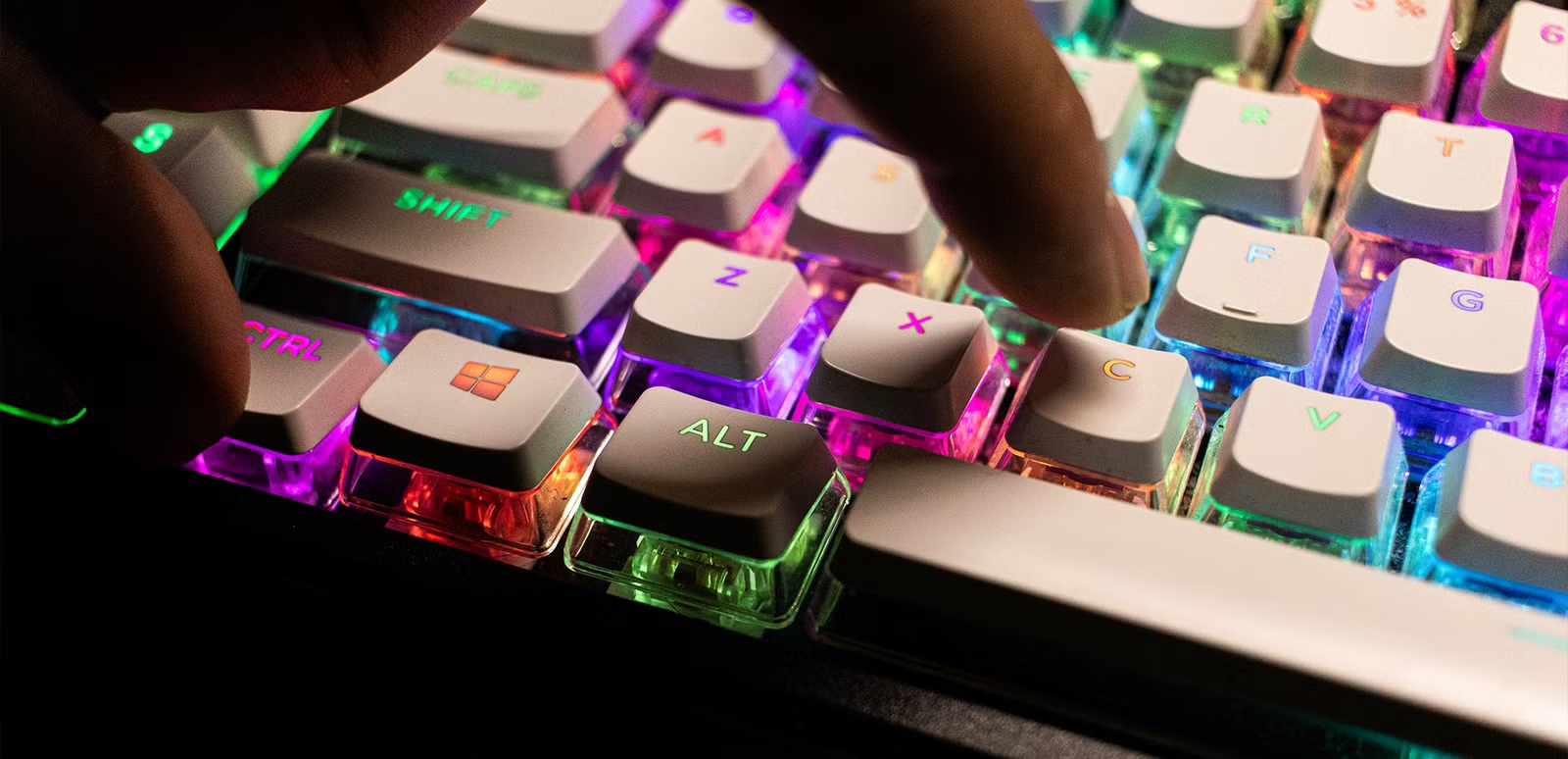
The gaming keyboard market is currently highly competitive. In the past, manufacturers differentiated themselves through RGB lighting effects, keycap materials, and design. However, as the industry matures, these elements are becoming increasingly difficult to establish as genuine technological barriers.
Therefore, keyboard switch technology is becoming a new core competitive advantage. Whoever can offer lower latency, higher input precision, and greater freedom of choice will find it easier to capture the gaming market. This is the fundamental reason why more and more gaming keyboard manufacturers are choosing magnetic keyboard switches.
Professional Gamers Are Influencing Consumer Preferences
Professional esports players have a significant impact on industry trends. Many gamers refer to the configurations of professional players and the peripherals used by streamers when choosing products. As professional players begin to use features like Rapid Triggers extensively, consumers are also starting to accept magnetic keyboard switches, which is a significant driving force behind technological upgrades.
Technical Trends of Magnetic Keyboard Switches in Future Gaming Keyboards
Lower Latency and Faster Signal Processing
One of the core competitive directions for future magnetic keyboard switches remains lower latency. Polling rate, signal scan, and firmware latency will all be key development areas.
More Compact Magnetic Keyboard Switch Structures
With the development of portable gaming devices, keyboard structures are becoming increasingly compact. Ultra-thin gaming keyboards require smaller keyboard switches, and thinner Hall sensors, smaller magnet structures, and more compact PCB designs are likely to become important trends.
Higher Durability Requirements
Future magnetic gaming keyboards will have increasingly higher lifespan requirements. The industry is currently moving towards a lifespan of over 100 million keystrokes, lower wear, and long-term stable input. The high-end gaming peripheral market will further increase its requirements for long-term stability.
Magnetic Keyboard Switch Supports Smarter Firmware Integration
Magnetic keyboard switches are easier to integrate deeply with smart firmware. Future gaming keyboards are likely to become more and more like "smart input terminals," rather than just traditional peripherals.
Conclusion
As the esports industry continues to expand and players' demands for input performance increase, magnetic keyboard switches are gradually becoming a core development direction in gaming keyboard design. They offer significant advantages in response speed, adjustable triggering, lifespan, and intelligent control.
In the future, with the continued expansion of AI esports peripherals, smart firmware, high-end custom keyboards, and the professional esports ecosystem, the market penetration rate of magnetic keyboard switches is expected to further increase. Early adoption of high-performance magnetic keyboard switch technology developed by micro switch manufacturers will be a crucial factor in future competition in the high-end esports peripheral market.
How to Test an Air Pressure Switch in 5 Simple Steps
Sealed Miniature Micro Switch Applications in Modern Floor Scrubbers
Related Article