How Does a Subminiature Micro Switch Work in Automotive ETC?
Automotive ETC is an onboard system used for electronic vehicle toll collection. When a vehicle passes through an ETC lane, the onboard unit wirelessly communicates with roadside equipment to complete vehicle identification, information exchange, and toll processing. It is often installed in locations such as the vehicle's windshield and contains a communication module, control PCB, power management, and related electronic components.
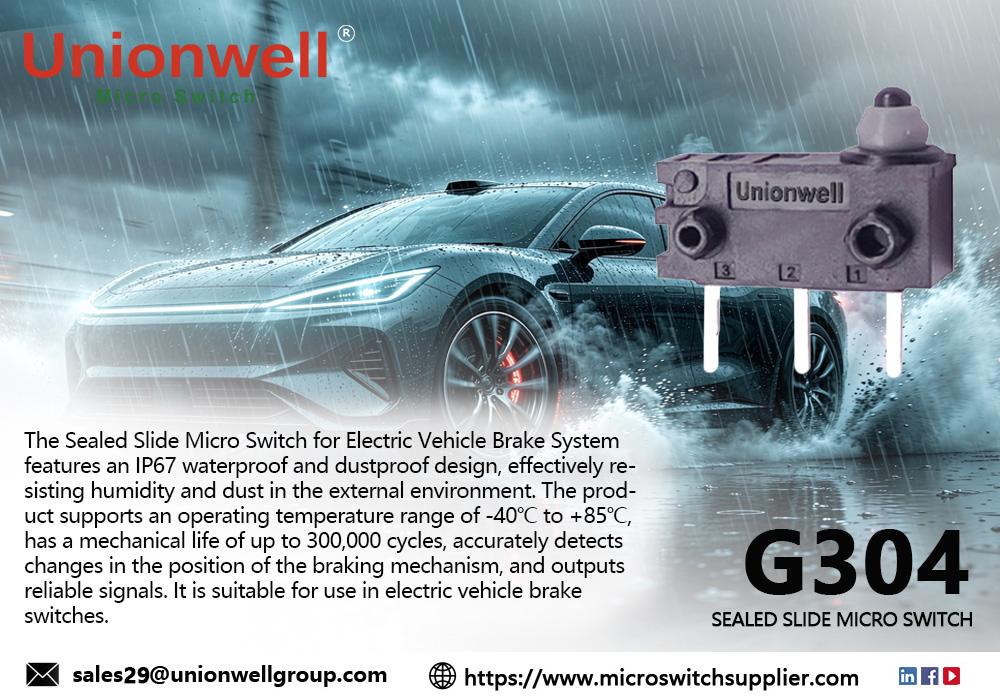
Among these, a subminiature micro switch can be used as a tamper switch in automotive ETC. It detects changes in the position of its internal mechanical structure through mechanical triggering and converts this into an electrical signal. This article will focus on analyzing how a subminiature micro switch is applied to tamper detection in automotive ETC and why a micro switch is suitable for this application.
What is a Subminiature Micro Switch in Automotive ETC?
What is Automotive ETC?
Automotive Electronic Toll Collection (ETC) is an electronic system used for automatic vehicle toll collection and traffic identification. Compared to methods requiring manual stopping for payment, ETC completes the exchange of vehicle identity and transaction information through wireless communication between the onboard unit and roadside equipment.
From a device composition perspective, an automotive ETC (Electronic Toll Collection) system includes an On-Board Unit (OBU), communication module, control circuitry, power module, and related electronic and mechanical structures. The OBU is installed inside the vehicle and establishes communication with the Roadside Unit (Roadside Unit) when the vehicle passes through the toll area.

An ETC is not simply a combination of electronic modules; its housing, cover, PCB, and internal mechanical structure also need to maintain a predetermined state. Therefore, in some designs requiring tamper detection, a Tamper Detection Mechanism is added.
A Subminiature Micro Switch can be installed within the ETC's internal structure to detect the device's state via mechanical triggering. When a specified mechanical structure changes position, the Micro Switch's Contact State changes accordingly, and the control circuitry immediately recognizes this input. Therefore, in automotive ETCs, the Subminiature Micro Switch is a state detection component, not a communication or toll collection device.
Why is a Subminiature Micro Switch Used as a Tamper Switch?
The primary function of the Tamper Switch is to detect whether the device has been disassembled or undergone structural changes. Taking an ETC housing as an example, when normally closed, the cover or internal mechanism applies mechanical force to the switch actuator. When the housing is opened, the mechanical constraint disappears, the actuator displaces, changing the contact state and thus converting the mechanical change into an electrical signal.
Since tamper detection only needs to determine normal or abnormal states without continuously measuring specific displacements, the subminiature micro switch is well-suited for this application. However, it only provides the detection signal; subsequent event logging, state change processing, etc., are determined by other functional modules.
How does a Subminiature Micro Switch work as an ETC Tamper Switch?
Housing Movement Activates the Subminiature Micro Switch
The tamper detection of the Subminiature Micro Switch relies on a defined mechanical relationship: changes in the position of the ETC housing or its internal structure must be reliably transmitted to the Switch Actuator. When the Car ETC housing is opened, the mechanical relationship between the Cover and the Actuator changes. The Actuator resets under the action of the Spring Mechanism, allowing the Contact Structure to complete its state switch.
Therefore, the design cannot only consider the Switch itself; it must also comprehensively consider Housing Travel, Actuator Travel, Operating Force, Actuation Position, and Overtravel. Large mechanical tolerances in the Cover may cause trigger position offsets, leading to false triggering or unreliable detection by some devices.
The Controller Processes the Tamper Signal
After the Subminiature Micro Switch completes contact switching, the electrical signal enters the ETC Control Circuit through the terminal and PCB, forming an electronic process of Micro Switch Contact → PCB Input → Controller → Tamper Detection Logic.
When using an SPDT Micro Switch, NO or NC wiring methods can be selected according to circuit requirements. Therefore, in actual projects, the electrical rating, contact configuration, contact resistance, and PCB interface must all be matched and verified with the control circuit.
Why Is a Subminiature Micro Switch Suitable for Automotive ETC?
Compact Size and Flexible Installation
ETC on-board units need to integrate PCBs, communication components, power supply components, and other mechanical structures within a limited housing. Compared to other larger switches, the Subminiature Micro Switch can be more easily placed at the edge of the PCB, inside the housing, or between the cover and the internal structure.
This flexibility helps engineers achieve a more reasonable Tamper Detection Structure within limited space. However, the Micro Switch size, Actuator Position, and Housing Tolerance must be compatible; otherwise, issues such as mechanical interference, insufficient triggering, or continuous overload may occur.

Clear Switching Signal and Mechanical Detection
The core requirement of Tamper Detection is to identify state changes, not to obtain continuous position data. The Subminiature Micro Switch can directly provide ON/OFF signals to the Controller, and its detection logic is very straightforward.
When a mechanical change occurs in the ETC Housing, the Actuator changes accordingly, the Micro Switch's Contact switches, and the Controller receives the state signal. The entire link involves no complex position calculations, making it suitable for explicit mechanical state detection.
For ETC products, this also allows Tamper Detection to remain relatively independent of other functional modules. The Subminiature Micro Switch does not need to participate in wireless communication; it only needs to reliably complete the transition from mechanical to electrical states.
What are the Key Design Considerations for an Automotive ETC Tamper Switch?
Mechanical Tolerance Between Housing and Subminiature Micro Switch
The stable operation of the subminiature micro switch largely depends on its mechanical tolerance matching with the ETC housing. Dimensional errors in various components accumulate and ultimately affect the actuation position. If the cover's range of motion is insufficient, the switch may fail to operate reliably; if the deviation is too large, it may cause excessive compression of the actuator.
Therefore, the design should comprehensively consider housing travel, actuator travel, actuation position, release position, and overtravel, and allow for a reasonable mechanical margin. Especially in mass production, a certain tolerance helps avoid inconsistencies in trigger positions between different products.
Avoid Excessive Actuator Load
In addition, it is necessary to avoid the housing exerting excessive pressure on the actuator for extended periods. Prolonged excessive mechanical load can increase mechanical stress and affect mechanical life. Therefore, the design needs to reasonably match operating force, travel, and overtravel. The goal is to ensure stable triggering of the mechanical structure while avoiding excessive mechanical load during normal assembly.
Verify the Complete ETC Assembly
Subminiature Micro Switch datasheet testing cannot completely replace full-system verification. In actual ETC products, the switch works in conjunction with other functional modules. Therefore, final verification should be performed in a fully assembled state. Only by evaluating the performance of the individual Micro Switch and the complete ETC assembly together can the reliability of the tamper-proof design be truly determined.
The Future Development of Subminiature Micro Switch for Automotive ETC
As automotive electronics continue to miniaturize and integrate, the internal PCB and mechanical structure of ETC devices will become more compact:
- Smaller size will make these automotive micro switches easier to install in compact housing and PCB spaces;
- Higher reliability ensures stable contact performance and mechanical life;
- Flexible actuator design helps it adapt to different mechanical transmission methods;
- Higher integration allows for better compatibility between mechanical structures, electrical interfaces, and control systems.
For manufacturers, this means that the development focus of micro switches will gradually shift from single switch performance to the overall integration of micro switch + housing + PCB + control circuit.
Conclusion
In automotive ETC, the subminiature micro switch acts as a tamper switch, detecting changes in the position of the housing or mechanical structure and providing explicit status signals to the controller. Its core operation can be summarized as: Housing Position Change → Actuator Movement → Contact Switching → Tamper Signal → Controller.
For ETC product developers, when choosing a Subminiature Micro Switch manufactured by a Micro Switch Manufacturer, it's not just about checking if the size is small enough; it's also about ensuring reliable triggering, stable signals, and long-term mechanical performance, as well as maintaining accurate mechanical matching with the entire tamper protection mechanism.
How Does a Basic Micro Switch Work in an Electric Screwdriver?
How Does a Miniature Micro Switch Work in a Blood Pressure Monitor?
Related Article